Rust forum week 25 turns ideas into shipping work
A Rust forum thread broken down into practical patterns you can copy for generators, GUIs, error crates, and agents.

This thread shows how Rust devs turn rough ideas into working tools.
I've been reading these weekly Rust forum check-ins for a while, and this one felt familiar in the annoying way. Nobody was posting polished launch notes. It was just people grinding through the same stuff I grind through: a code generator that needs tests, a GUI that has to keep up with a daemon, an error crate trying to stay type-safe without turning into a mess, and a tiny applet that started as a few hours of work and immediately became useful. That’s the part I like. It’s not the “look what I built” energy. It’s the “here’s the part that broke, here’s what I changed, here’s what I still don’t trust” energy.
The thread I’m breaking down is What’s everyone working on this week (25/2026)? on the Rust Programming Language Forum. There’s no single thesis from the thread, which is exactly why it’s useful. You can see how different Rust projects get unstuck: add tests, isolate state, reduce unsafe, name the IPC event correctly, and stop pretending a “small” tool won’t need real structure once somebody actually uses it.
1) The fastest way to make a generator trustworthy is to test the outputs
Get the latest AI news in your inbox
Weekly picks of model releases, tools, and deep dives — no spam, unsubscribe anytime.
No spam. Unsubscribe at any time.
"I'm continuing to work on xidl , a code generator for generate HTTP server and client code. I recently added BDD tests to xidl to ensure consistency across multi-language implementations."
What this actually means is simple: if your tool emits code for more than one language, you do not get to trust vibes. You need tests that compare behavior, not just syntax. cathaysia is working on xidl, and the interesting part is not that it generates HTTP server and client code. Plenty of tools do that. The interesting part is that they added BDD tests because the real failure mode is drift between implementations. One language starts doing one thing, another language starts doing something “almost the same,” and now your generator is quietly lying.

I’ve seen this exact problem in internal tooling. The first version works because you only generate one target and you manually inspect the files. Then someone asks for another runtime, and suddenly the tool isn’t a generator anymore. It’s a consistency machine. That’s where tests stop being “nice to have” and start being the only thing keeping the project from turning into folklore.
BDD is a good fit here because you’re not just checking functions in isolation. You’re checking a scenario: input schema in, server/client artifacts out, and the generated behavior matches across targets. If one language gets a different default header or a different error path, the test should fail loudly. No hand-waving. No “we’ll fix it later.”
How I’d apply this in my own work:
- Write one fixture per real-world API shape you care about.
- Generate every supported target from the same fixture.
- Compare behavior, not just file existence.
- Lock in the weird cases early: optional fields, streaming, auth, retries.
If you’re building a generator, I’d rather see three ugly BDD scenarios than fifty untested abstractions. The scenarios tell me what you think the tool actually does.
2) Tiny language ports get big fast once you add one smart feature
"Translating a 1978 BASIC program to rust - Lunar Lander . The original is only 70 loc - the rust version is 3-4 times longer - not counting a genetic algorithm I'm adding to find optimal landing sequences."
Jesper’s post is the kind of thing I love because it exposes the lie we tell ourselves about “simple” ports. The original BASIC program is 70 lines. The Rust version is already 3 to 4 times longer, and that’s before the genetic algorithm. That’s not Rust being bloated. That’s reality showing up with receipts. Once you move from a tiny script to a typed, maintainable, extensible version, the line count grows. Once you add search or optimization, it grows again.
What this actually means is that ports are never just ports. They are translations plus decisions. The BASIC version probably encoded assumptions in the shape of the code. In Rust, you have to make those assumptions explicit. That’s work. But it’s also the point. You’re not just preserving behavior, you’re making the behavior inspectable.
I ran into this years ago when I rewrote a small physics toy from a scripting language into Rust. The original was “done” in a weekend. The Rust version took longer because I had to decide what units meant, where state lived, and how to keep the simulation deterministic. The upside was that once I added search and tuning, I wasn’t fighting the code anymore. The extra structure paid for itself the moment the project stopped being a toy.
There’s also a practical lesson here about scope creep. If you say “I’m just translating this old program,” you’re already lying a little. The minute you add a genetic algorithm, you’re in a different project. That’s fine. Just name it honestly so you don’t keep comparing the final thing to the original line count like that’s a fair metric.
How I’d apply this:
- Separate the literal port from the new features.
- Keep the original behavior in a small test harness.
- Make the new algorithm a module, not a pile of helper functions.
- Track correctness first, then optimize the search.
If I were writing this up for my own repo, I’d say: “ported from BASIC” is the origin story, not the architecture.
3) GUI work gets real when the backend starts talking back
"Polishing ringdrop-gui , the Tauri v2 frontend for ringdrop daemon. This week: adapting to a new daemon IPC event ( FileProgress ) during directory transfers, and namespacing progress channels by blob hash so concurrent downloads are possible."
This one is exactly the kind of boring systems work that eats half a week and saves the product. rikettsie is working on Tauri v2 frontend code for a daemon, and the key details are the new IPC event and the namespacing by blob hash. That sounds small until you’ve ever had two transfers happening at once and your UI starts mixing progress bars like it’s trying to sabotage you.
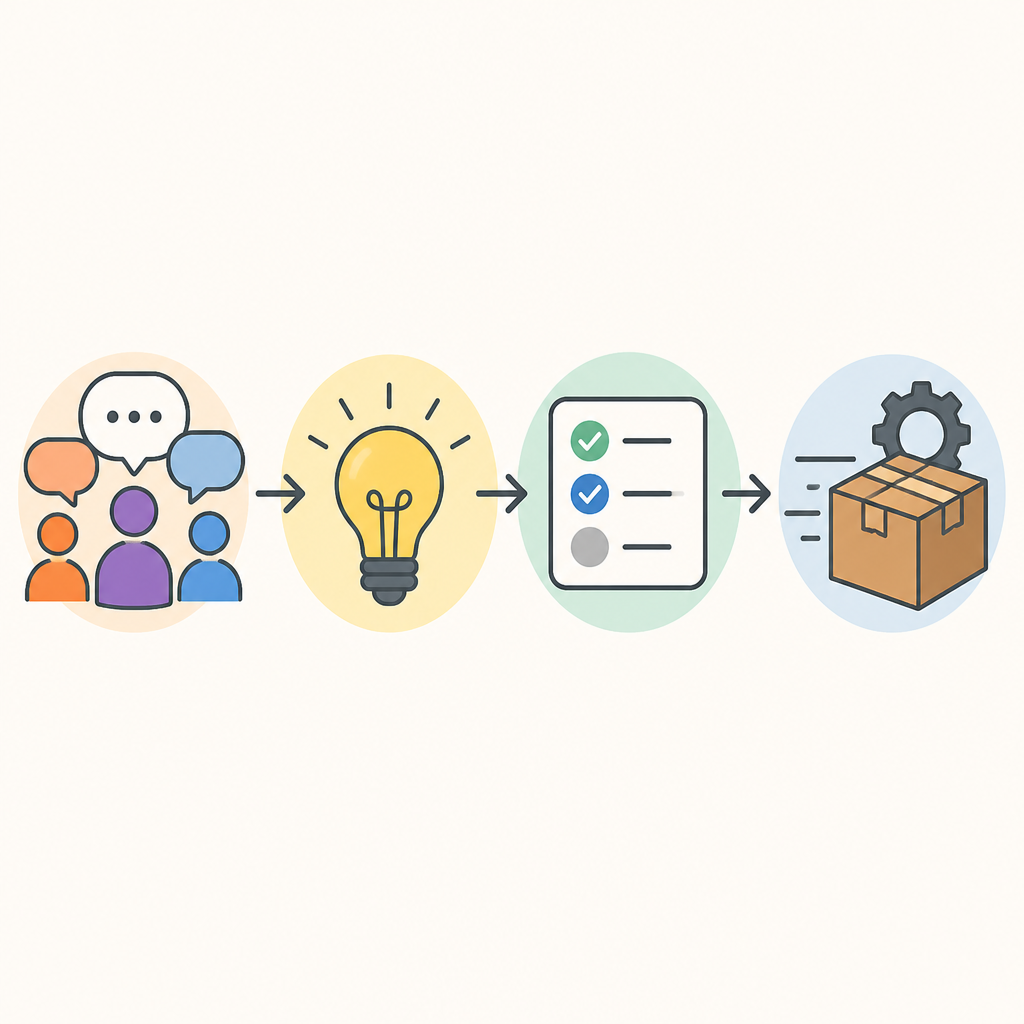
What this actually means is that UI state has to be treated like a routing problem. If you don’t namespace progress, you’re assuming only one thing can happen at a time. That assumption usually lasts until the first real user. The daemon emits a FileProgress event, the frontend receives it, and now you need a stable way to map that event to the right transfer. Blob hash is a sensible key because it gives the progress channel an identity that survives concurrency.
I’ve had to do this in desktop apps where the backend was fast enough to outrun the frontend. The bug never looked like “bad architecture.” It looked like random UI flicker, stale progress, or the wrong row updating. The fix was always the same: stop treating events as generic and start treating them as scoped messages with IDs.
There’s also a lesson about adapting to backend changes without ripping the UI apart. If the daemon adds an event, don’t just stuff it into the old state shape. Ask what the event means for concurrency, ordering, and cancellation. If those answers are fuzzy, the UI will be fuzzy too.
How I’d apply this:
- Give every long-running job a stable ID.
- Namespace progress, logs, and errors by that ID.
- Model new IPC events as state transitions, not random notifications.
- Test two concurrent jobs before you call it done.
That’s the part people skip. Then they spend the next month debugging “why did the second download overwrite the first one?”
4) Small desktop utilities win by being stupidly easy to reach
"Theme mode applet for cosmic Hi, I made an applet for cosmic DE to switch between light and dark mode easily from the taskbar. Only a few hours work but I think it may be useful."
akshy’s applet for COSMIC DE is a reminder that usefulness often comes from removing friction, not adding features. A light/dark mode switch in the taskbar is not glamorous. It’s the opposite. But if you toggle theme often, it matters that the control is right there instead of buried in settings. That’s the whole product.
What this actually means is that a tiny applet can be a valid project if it sits close to a repeated action. People love to overbuild utilities because they assume the value has to come from complexity. Usually it doesn’t. It comes from placement, speed, and not making me hunt for the thing I use every day.
I’ve built little desktop helpers like this, and the pattern is always the same: the code is small, but the interaction design matters more than the code. If the toggle is awkward, the tool dies. If it’s one click from the taskbar, it becomes muscle memory. That’s the whole game.
There’s also a good Rust lesson here. Small applets are a nice place to practice the boring but important parts of app development: settings persistence, system integration, and state sync. You don’t need a giant app to learn those things. You need a narrow problem with a clear payoff.
How I’d apply this:
- Pick one frequent action and remove every extra click.
- Keep the UI surface tiny.
- Make the applet survive restarts without manual setup.
- Ship the first useful version before you add preferences.
If I were reviewing this as a teammate, I’d ask one question: does this save me time every day, or is it just a neat demo? In this case, it sounds like the former.
5) Error crates get interesting when they stop pretending all errors are the same
"Polishing erratic, my error handling crate . It composes nicely between type-erased errors and typed error states, and uses pointer tagging to eliminate allocations whenever possible. To reduce the number of unsafe , I plan to find (or write) something like GhostCell in the next couple of days to ensure vtable functions can only be invoked with the correct type-erased self ."
lan’s GhostCell-adjacent thinking here is where the thread gets very Rust-specific in a good way. The crate, erratic, is trying to compose typed error states with type-erased errors, while using pointer tagging to avoid allocations when possible. That is a lot of moving parts, but they’re all pointing at the same problem: error handling has to be ergonomic without losing structure.
What this actually means is that there are at least two kinds of error data in a real system. One kind is specific and typed, where the caller needs to know exactly what failed. The other kind is dynamic and erased, where you want to carry context around without exploding the type system. If your crate only handles one of those, it’s going to feel incomplete. If it handles both badly, it’s going to feel clever and annoying.
I like the mention of pointer tagging because it shows the author is thinking about cost, not just API shape. Allocations add up. But the unsafe story matters just as much. If the crate relies on type-erased self references, then the invariants need to be obvious or enforced. Looking at something like GhostCell is a sane move because it gives you a model for borrowing and identity without making the whole API mushy.
I’ve been burned by error abstractions that were technically elegant and practically miserable. They made the happy path fine and the failure path unreadable. The better approach is to decide what must stay typed, what can be erased, and what the caller actually needs at the boundary. That’s the part users feel.
How I’d apply this:
- Separate recoverable typed states from transport-style erased errors.
- Measure whether allocations actually matter before optimizing them away.
- Keep unsafe code behind a tiny, well-documented boundary.
- Write examples for both the “simple error” and “rich state machine” cases.
If an error crate can’t explain itself in one small example, I don’t trust it. If it can explain both worlds, I start paying attention.
6) Agent frameworks get weird fast, so name the weirdness early
"I've recently come up with a new idea to optimize my own agent framework : integrate chaos engineering into the agent system. That should be really exciting."
Timwood0x10’s idea is the one that made me pause. Chaos engineering inside an agent framework is either a terrible idea or exactly the kind of idea that exposes hidden assumptions before users do. Probably both. And honestly, that’s why it’s worth thinking about.
What this actually means is that agent systems fail in messy, stateful ways. They depend on tools, prompts, retries, memory, and external services. If you only test the sunny path, you’ll miss the real failure modes. Chaos engineering is about injecting controlled failure so you can see what breaks. In an agent framework, that could mean dropped tool responses, delayed context, malformed outputs, or partial state corruption.
I’ve worked around enough agent-y systems to know the pattern: everything looks fine until one dependency hiccups, then the whole pipeline starts improvising. Sometimes that improvisation is useful. Often it’s just silent drift. Putting failure injection into the framework is a good way to stop pretending the system is more deterministic than it is.
But I’d be careful. Chaos is only useful if the system has observability and a clear recovery policy. Otherwise you’re just making your own debugging harder. You need to know what was injected, where it happened, and what the agent did next. Without that, you’re not testing resilience. You’re generating noise.
How I’d apply this:
- Inject one failure mode at a time.
- Log the injection point and the recovery path.
- Measure whether the agent retries, stalls, or hallucinates a fix.
- Keep the chaos layer opt-in and deterministic for tests.
That’s the part I’d want before I called it an optimization. If the framework can survive controlled nonsense, then maybe it deserves to be used on real nonsense.
The template you can copy
# Weekly Rust progress note template

## What I worked on
- [Project name]
- [One sentence on the current goal]

## What changed this week
- [Concrete change #1]
- [Concrete change #2]
- [Concrete change #3]

## What broke or felt off
- [Bug, design issue, or friction point]
- [Why it happened]
- [What I changed to address it]

## What I’m testing now
- [Test type: BDD, unit, integration, manual]
- [Scenario or behavior being verified]
- [Edge cases that still worry me]

## How I’m handling state and identity
- [How events/jobs/records are keyed]
- [How concurrency is isolated]
- [How I avoid mixing unrelated work]

## What I’m keeping small
- [One thing I refused to overbuild]
- [One API or UI surface kept narrow]
- [One unsafe or complex boundary kept tiny]

## Next step
- [The next concrete action]
- [The risk I want to answer]
- [The minimal version I’ll ship]

## One-line summary
I’m building [thing] by [approach], and this week I learned [specific lesson].
The thread is original community content, and my breakdown is a derivative reading of it, not a separate source of truth. If you want the raw discussion, start at the Rust forum thread: https://users.rust-lang.org/t/whats-everyone-working-on-this-week-25-2026/140724.
// Related Articles