Why Rust Should Not Be a Child’s First Programming Language
Rust is a poor first programming language for most children, even if it is a great second or third one.
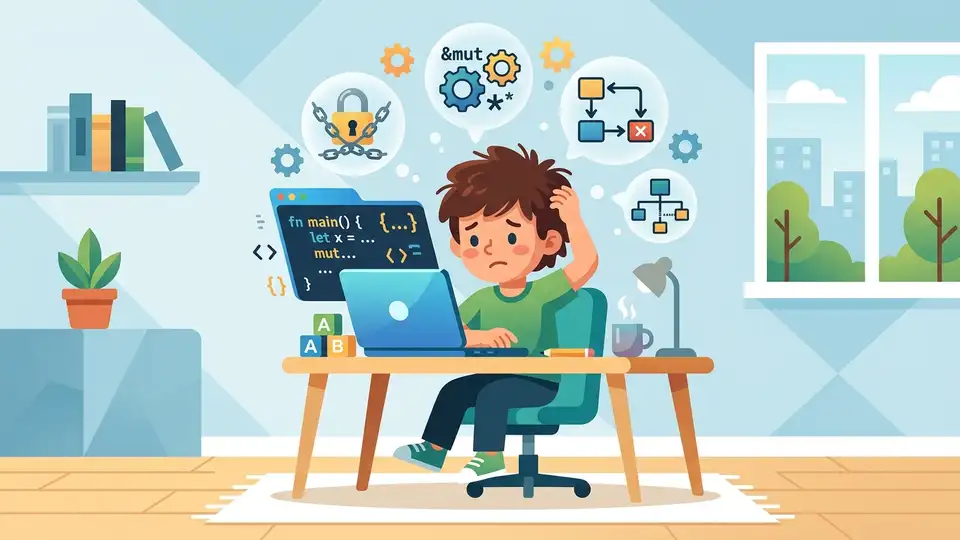
Rust is a poor first programming language for most children, even if it is a great second or third one.
Rust should not be a child’s first programming language. The forum thread around The Land of Rust makes the case for charm and accessibility, but the strongest feedback in the discussion points the other way: kids need more immediate feedback, less cognitive load, and a gentler path into programming than ownership, borrowing, and lifetimes.
Rust is too conceptually dense for a first encounter
Get the latest AI news in your inbox
Weekly picks of model releases, tools, and deep dives — no spam, unsubscribe anytime.
No spam. Unsubscribe at any time.
The first problem is not whether children are smart enough. It is whether the language asks them to juggle too many new ideas at once. In the thread, even supporters of the project warn that references arrive by chapter 4 and that ownership and lifetimes are unavoidable. That is not a small detail. A beginner book for 9-year-olds should spend its energy on loops, conditionals, and problem solving, not on explaining why the compiler rejects a perfectly sensible-looking line.
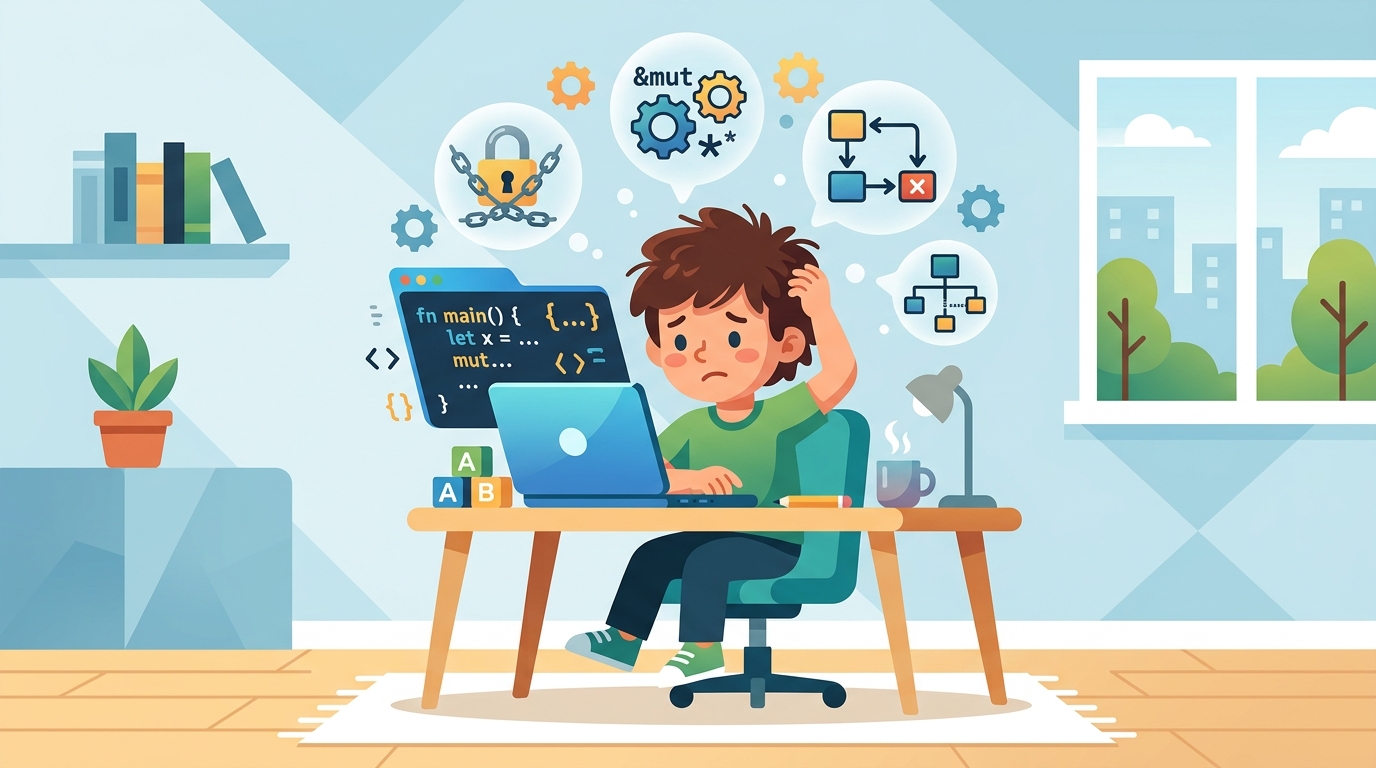
Rust’s defining strengths are also its teaching burden. Safety without a garbage collector is a brilliant design choice for systems programmers, but it comes with a cost in explanation. A child opening a first coding book should get frequent wins, not a steady stream of rules that feel like exceptions. The more a language depends on precise mental models of memory and scope, the less suitable it is as the first tool for building confidence.
Children learn faster when the language gets out of the way
The best beginner languages are successful because they reduce friction. Python, Scratch, and similar environments let learners focus on the cause-and-effect of code. Type a line, run it, see a result. The forum replies reflect this reality: one commenter argues that Python’s interactive interpreter and garbage-collected model make it more learning-friendly, and that is exactly the point. Early programming education should maximize feedback and minimize ceremony.
There is also a practical issue with attention span. A child who is excited by space adventures and Ferris the Crab may still lose momentum if every chapter introduces a new constraint that requires careful reasoning. The project author says workshops with 400 to 500 kids shaped the book, which is encouraging. But workshops are not the same as independent reading, and a book that works in a guided session can still fail as a self-paced first language experience. A first language should survive boredom, not depend on charisma.
Rust works better as a second language that explains how computers behave
Rust becomes much more compelling when the goal shifts from “learn programming” to “learn what programming is doing underneath.” Several forum participants land on this exact idea: Rust is a strong way to teach how computers work under the hood. That is the right niche. Once a learner already knows variables, functions, and basic control flow, Rust can introduce memory, ownership, and safety as meaningful answers to real engineering problems rather than as obstacles to getting started.
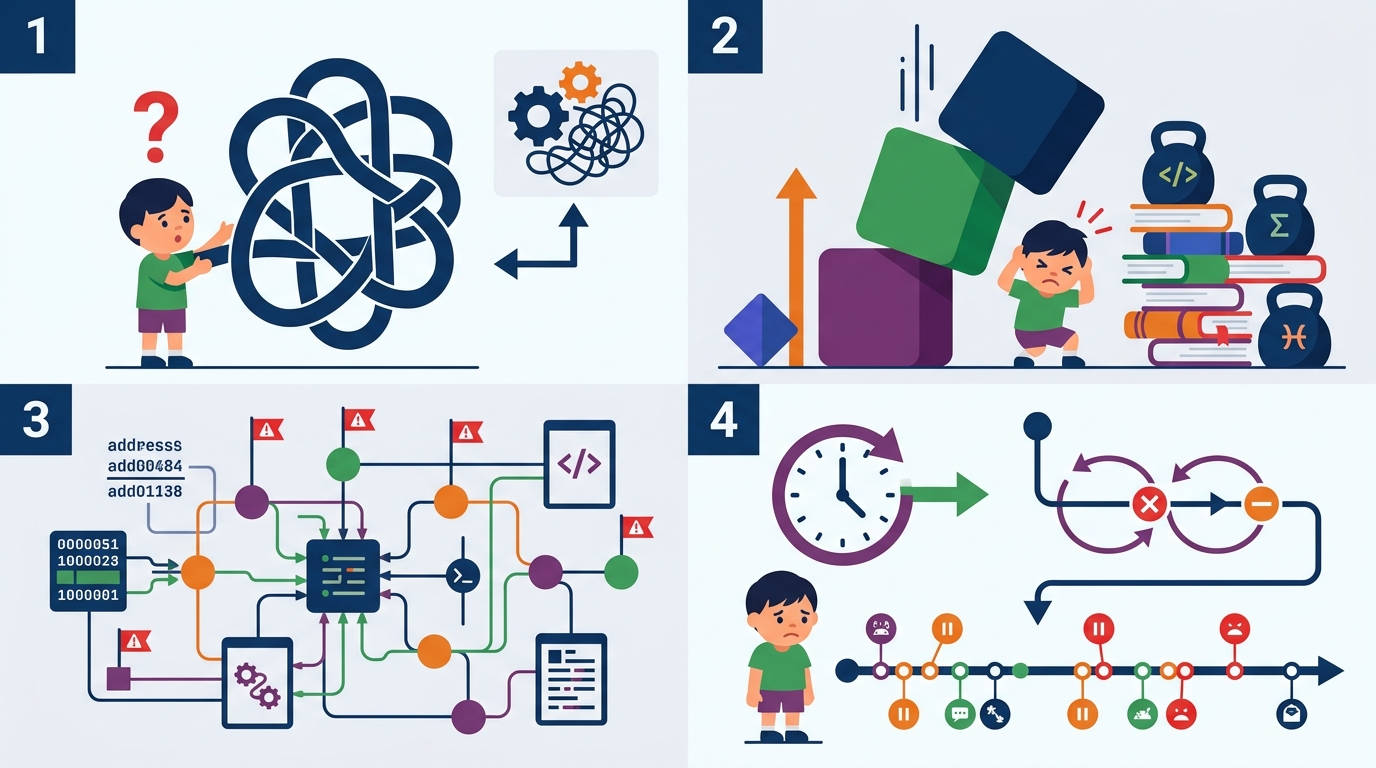
This is where the book’s concept has real value. The space setting and mascot can turn a hard subject into something memorable, and the open-source approach invites iteration. But that value belongs in an advanced beginner or transition-stage curriculum, not in the very first book a child reads about code. Rust is a language that rewards curiosity after the basics are in place. It is not the best language to use when the only goal is to teach the basics themselves.
The counter-argument
The best argument for making Rust a child’s first language is that children are not fragile, and difficult concepts are not automatically inappropriate. One forum participant makes this case directly: ownership and lifetimes can be taught with simple metaphors, just as arithmetic eventually gives way to algebra. Another points out that kids already learn hard things in math and electronics, so programming should not be artificially simplified forever. That criticism matters. If a book is honest about difficulty and uses strong visuals and metaphors, Rust can be made approachable.
That said, this argument only proves that Rust can be taught early, not that it should be the first language. There is a difference between accessible and optimal. A child can absolutely learn from a Rust-themed book, and some will thrive on the challenge. But for most beginners, the best first experience is still the one that teaches core computational thinking with the fewest moving parts. Rust’s complexity is not a temporary presentation problem. It is part of the language’s identity.
What to do with this
If you are an engineer, PM, or founder building education content, stop asking whether a language is impressive and start asking whether it creates early wins. Use Rust for the second step: after learners can already think in terms of variables, functions, and state, show them why ownership and borrowing exist. If you are building a children’s book, keep the story and visuals, but frame it as an advanced exploration of how safe software works, not as the universal first stop for programming newcomers.
// Related Articles
- [TOOLS]
Aliyun Bailian Token Plan turns credits into agents
- [TOOLS]
One API gateway turns six AI APIs into one
- [TOOLS]
OpenAI FDEs turn broken agents into shipped systems
- [TOOLS]
Anthropic’s daily brief turns news into a workflow
- [TOOLS]
Claude Reflect turns usage into retention
- [TOOLS]
Midjourney turns prompt ideas into art