Tim Deschryver’s practical AI workflow for devs
Tim Deschryver shows how AGENTS.md, skills, and specs make coding agents faster and more consistent.

Tim Deschryver says simple project rules make coding agents far more useful.
Tim Deschryver says he rewrote a project from scratch with agentic AI over the last month, and the result was fast enough to matter while still needing human judgment. His point is blunt: you do not need a giant prompt stack to get value from AI in software development.
Instead, he treats the agent like a strong assistant on a cycling team, with the developer still calling the shots on architecture, scope, and quality. That framing matters because it keeps the work practical: the AI writes more code, but the human keeps control of the finish line.
| Workflow piece | What it does | Why Tim uses it |
|---|---|---|
| AGENTS.md | Stores project instructions, commands, and conventions | Keeps every agent request grounded in the same rules |
| Skills | Task-specific markdown guidance for tools and frameworks | Loads only when needed, which keeps context focused |
| OpenSpec | Generates proposal.md, design.md, and tasks.md | Turns feature requests into a clear implementation plan |
He starts with architecture, not prompts
Get the latest AI news in your inbox
Weekly picks of model releases, tools, and deep dives — no spam, unsubscribe anytime.
No spam. Unsubscribe at any time.
Before letting an agent write code, Tim sets up the project structure himself. His example uses an ASP.NET Core API backend, an Angular frontend, and .NET Aspire to orchestrate the system.

That setup choice is doing a lot of work. By deciding on vertical slices, clear boundaries, and a front end built around Angular Signals, he gives the agent a target it can follow instead of a blank page it can wander across.
The practical lesson is simple: if your codebase is already shaped well, the agent has less room to produce weird output. Tim even says he prefers slices because they make it easier to rewrite or delete code when requirements change, which is exactly the kind of pressure software teams face after the first release.
- Backend: ASP.NET Core API
- Frontend: Angular with Signal APIs
- Orchestration: .NET Aspire
- Architecture style: vertical slices
AGENTS.md is the first file he wants in the repo
Tim treats AGENTS.md as the default instruction sheet for the coding agent. The file carries project rules, build and test commands, structure notes, and anything else the agent needs every time it works in the repository.
He also points out that different tools use different names. GitHub Copilot may use instructions.md, Claude uses CLAUDE.md, and Claude Code can read a referenced AGENTS.md file through a symlink or @AGENTS.md. The naming detail matters less than the habit: put the rules in one place, keep them current, and let every request start from the same baseline.
“The use of the term dates back to 1911, although such riders had existed before then.”
That quote is from Tim’s cycling explanation of a domestique, and it fits the article’s main idea. The developer is still the team leader, while the agent does the hard pulling in the background.
He also recommends putting a Mermaid database diagram into AGENTS.md when the data model gets complex. That is a smart move for agentic workflows because the model can read a dense diagram better than a human skimming a wall of text, and the file can be updated after each new concept in the same session.
- AGENTS.md is always in context
- It can include commands, conventions, and architecture notes
- Mermaid diagrams help describe data models
- Tim updates it whenever the project changes
Skills keep the context smaller and the output tighter
Tim’s next layer is skills, which are markdown files that can also include scripts. Unlike AGENTS.md, skills are pulled in only when the agent thinks they are relevant. That makes them better for focused tasks like creating a component, writing a test, or generating documentation.
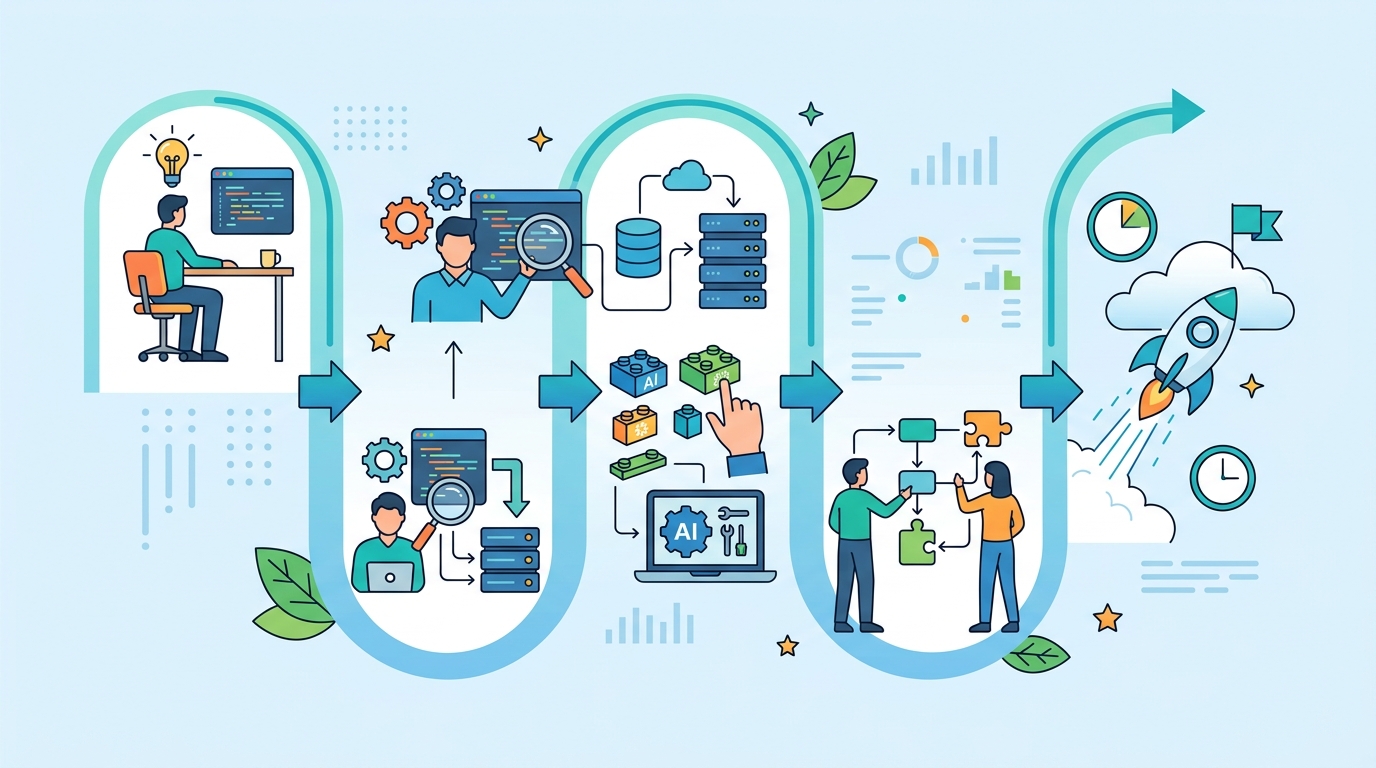
He uses official skills for Angular,
// Related Articles
- [TOOLS]
Aliyun Bailian Token Plan turns credits into agents
- [TOOLS]
One API gateway turns six AI APIs into one
- [TOOLS]
OpenAI FDEs turn broken agents into shipped systems
- [TOOLS]
Anthropic’s daily brief turns news into a workflow
- [TOOLS]
Claude Reflect turns usage into retention
- [TOOLS]
Midjourney turns prompt ideas into art