Why Banana Pi’s RISC-V edge AI board matters
Banana Pi’s BPI-SM10 shows RISC-V is ready for serious local AI hardware.
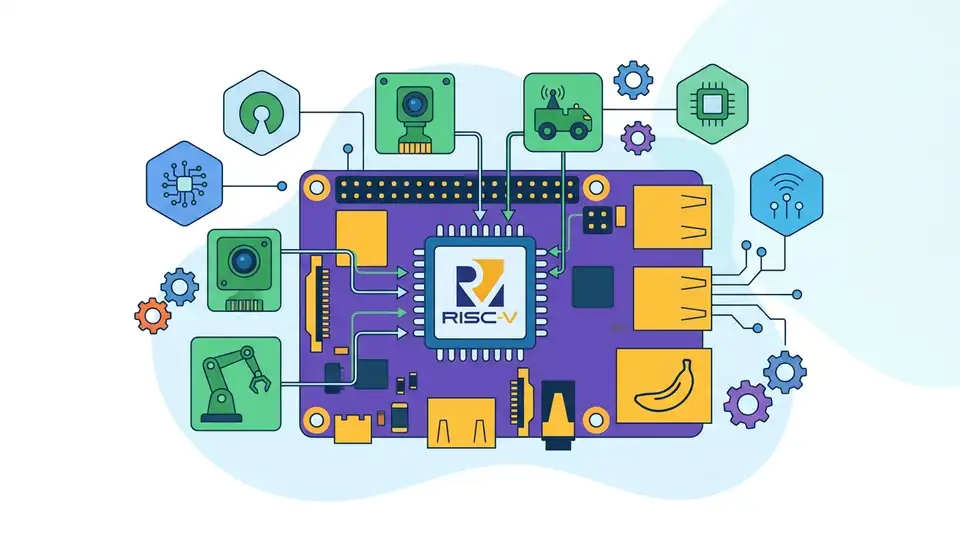
Banana Pi’s BPI-SM10 shows RISC-V is ready for serious local AI hardware.
Banana Pi’s BPI-SM10 is not a novelty board, and that is the point: it pushes RISC-V into the category that matters now, local AI inference for real products. The combination of 60 TOPS, support for 30B-class models, up to 32 GB of LPDDR5, and a carrier board that maps to Nvidia Jetson Orin Nano hardware tells you exactly what Banana Pi is aiming at. This is a serious attempt to make RISC-V relevant to edge AI developers who want something closer to a deployable platform than a science project.
RISC-V finally has a credible hardware story for local AI
Get the latest AI news in your inbox
Weekly picks of model releases, tools, and deep dives — no spam, unsubscribe anytime.
No spam. Unsubscribe at any time.
The biggest reason this board matters is that it moves RISC-V beyond the hobbyist and evaluation-board phase. Banana Pi is not selling a bare CPU core and asking developers to imagine the rest. It is offering a compact developer kit with eight X100 RISC-V CPU cores, eight A100 AI CPU cores, LPDDR5-6400 memory options up to 32 GB, and storage paths that include UFS, SD, and NVMe. That is the shape of a platform, not a demo.
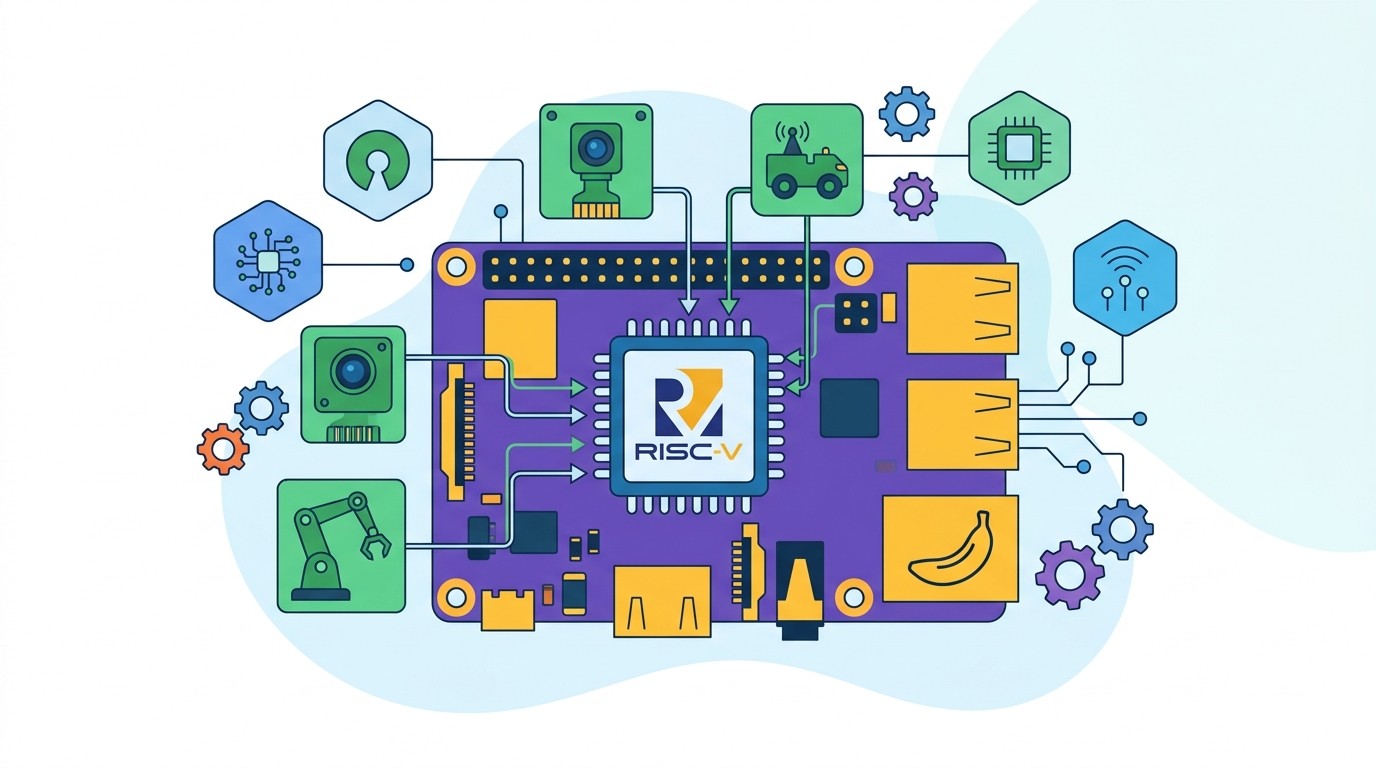
The more important detail is the software-facing architecture. The K3 module uses RVA23-compliant 64-bit cores, RVV 1.0 vector support, and a Linux story that now includes Ubuntu 26.04 LTS enablement on SpacemiT’s K3. That matters because the old RISC-V problem was never just raw performance. It was fragmentation. Boards without a stable application profile never earned developer trust. RVA23 is the first real sign that RISC-V can support rich OS stacks without forcing every vendor into its own island.
Banana Pi is targeting the right AI workload: local inference
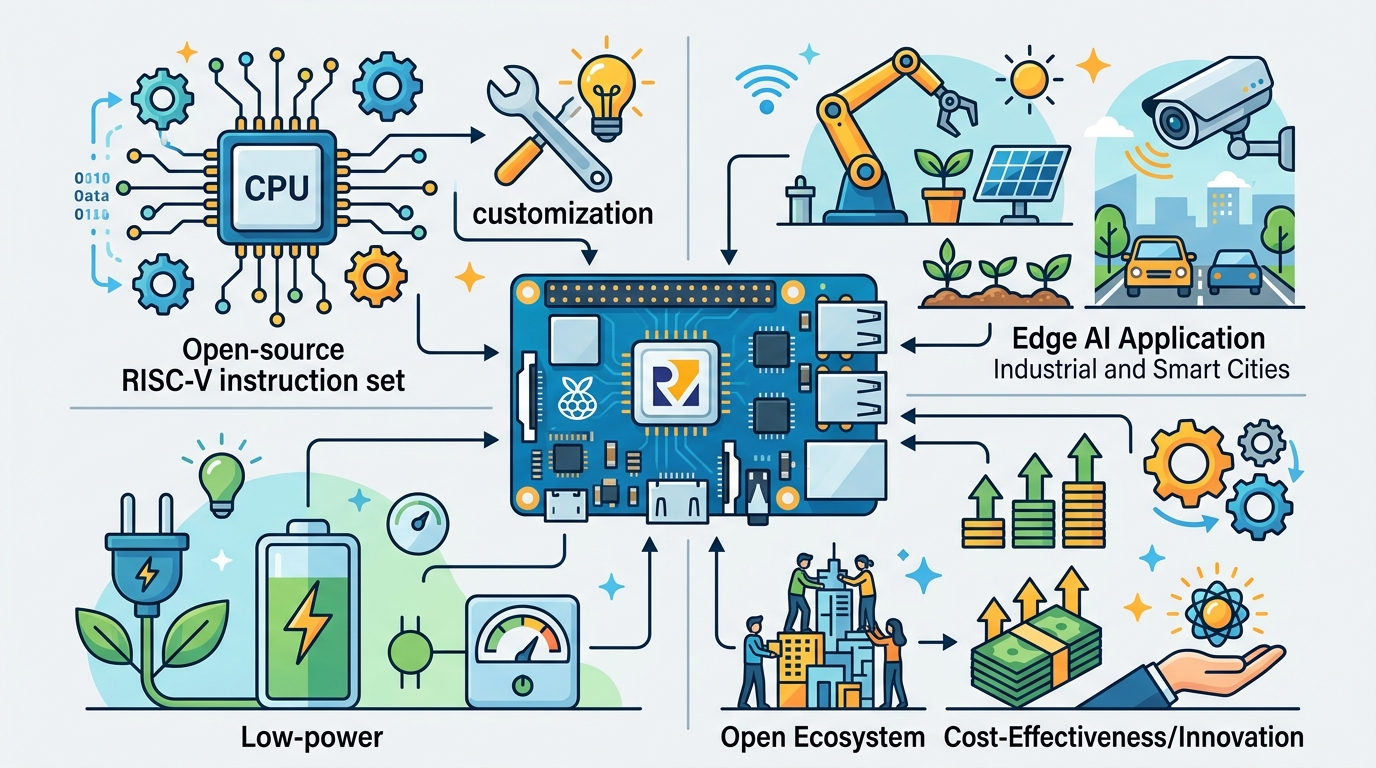
Local inference is where edge hardware earns its keep, and Banana Pi is correctly aiming at that market instead of chasing cloud-style training fantasies. The company says the BPI-SM10 can run 30B-class models and deliver more than 10 tokens per second on 30B workloads. That is not enough to beat a datacenter GPU, and it does not need to be. The real win is on-device AI for assistants, robots, office appliances, and industrial systems that cannot depend on round-trips to the cloud.
Banana Pi’s own positioning makes the target clear: edge AI agents, service robots, autonomous devices, industrial control, cluster computing, and on-device LLM terminals. That breadth is actually a strength, because it reflects where local AI demand is headed. The market does not need another board that only runs benchmarks. It needs hardware that can sit inside a product and handle vision, inference, and control loops without dragging in a full server stack. A 18 W to 35 W power envelope is exactly the kind of middle ground that makes that possible.
The Jetson-compatible move is smarter than it looks
Banana Pi’s choice to make the carrier board hardware-compatible with Nvidia Jetson Orin Nano is a practical strike at developer inertia. Developers do not switch platforms because of ideology. They switch when the migration path is cheap. A familiar carrier layout lowers the mechanical and board-design friction, which is often the first obstacle in bringing a new chip into a real product team.
This does not make RISC-V a Jetson replacement, and anyone pretending otherwise is selling fantasy. Nvidia’s moat is software, not just silicon. CUDA, tooling, libraries, and developer familiarity still dominate. But Banana Pi is doing the one thing that matters when challenging an incumbent: reducing the cost of trying. If a team can reuse part of its hardware thinking while evaluating a new architecture, the barrier to entry drops fast. That is how alternatives gain traction.
The counter-argument
The case against Banana Pi is straightforward. TOPS claims are cheap, and 30B-class model support sounds better than it often performs in practice. Edge AI buyers care about reliability, software maturity, and workload consistency, not just peak compute. Nvidia still owns the stack that developers trust, and RISC-V still lacks the broad ecosystem depth that makes deployment smooth across vision, robotics, and LLM pipelines.
There is also a real risk that this becomes another impressive board with limited real-world adoption. Local AI products fail when inference frameworks, drivers, and operating system support lag behind the hardware. If Banana Pi and SpacemiT cannot provide a repeatable path for LLM inference, vision workloads, and robotics integration, the board will end up as a benchmark curiosity.
That critique is valid, but it does not defeat the platform. It defines the challenge. Banana Pi is not asking the market to ignore software; it is building a hardware foundation that finally gives software a chance to catch up. RVA23 compliance, Ubuntu enablement, 32 GB memory support, and a Jetson-style carrier board are not marketing decorations. They are the minimum conditions for a serious RISC-V edge AI ecosystem. Earlier boards lacked those conditions, which is why they never escaped the lab.
What to do with this
If you are an engineer or product leader, treat the BPI-SM10 as a real evaluation target for local AI, not as a replacement for Nvidia by default. Test whether your inference stack, camera pipeline, and control loop run cleanly on it, then compare the total integration cost against Jetson-based designs. If you are building edge products where software portability, Linux support, and mechanical reuse matter, this is the right kind of RISC-V board to watch closely. The lesson is simple: RISC-V is no longer only interesting on paper, and Banana Pi just proved it can compete for serious edge AI work.
// Related Articles
- [IND]
WebX 2026 turns speaker hype into a conference brief
- [IND]
AI Weekly: 2026-07-06 ~ 2026-07-13
- [IND]
The AI Act should be treated as Europe’s operating system for AI
- [IND]
Booz Allen’s OpenAI Deal Is Real Advantage, Not Hype
- [IND]
OpenSearch’s vector search benchmark in 5 parts
- [IND]
Vector Databases That Work in Production