Zocks Brings MCP to ChatGPT and Claude
Zocks is rolling out MCP access for ChatGPT and Claude, aiming to cut copy-paste workflows and keep advisor client data governed.
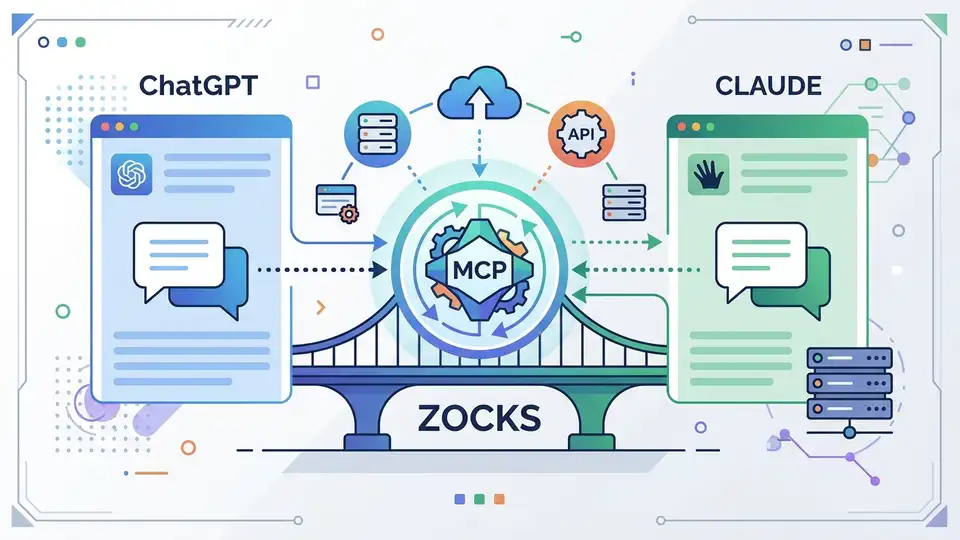
Zocks just made a very specific bet on how advisors will use AI: keep the client context inside a governed system, then let tools like ChatGPT and Claude work with it through Model Context Protocol. That matters because the company says many advisory teams are still copy-pasting notes, meeting summaries, and document snippets between systems just to get useful outputs.
In plain English: Zocks wants advisors to ask an AI tool a client question without dragging data across tabs, exports, and spreadsheets. That is a small workflow change on the surface, but it points to a bigger shift in wealth-tech software design, where the AI interface becomes the front end and the governed data layer does the hard work underneath.
What Zocks MCP actually does
Get the latest AI news in your inbox
Weekly picks of model releases, tools, and deep dives — no spam, unsubscribe anytime.
No spam. Unsubscribe at any time.
Zocks calls the new connector Zocks MCP. It links the firm’s client intelligence layer to general-purpose AI tools through the Model Context Protocol, which is an open standard for connecting AI apps to external data and tools. The point is to let advisors query client-specific information inside the AI interface they already use, instead of rebuilding prompts from scratch every time.
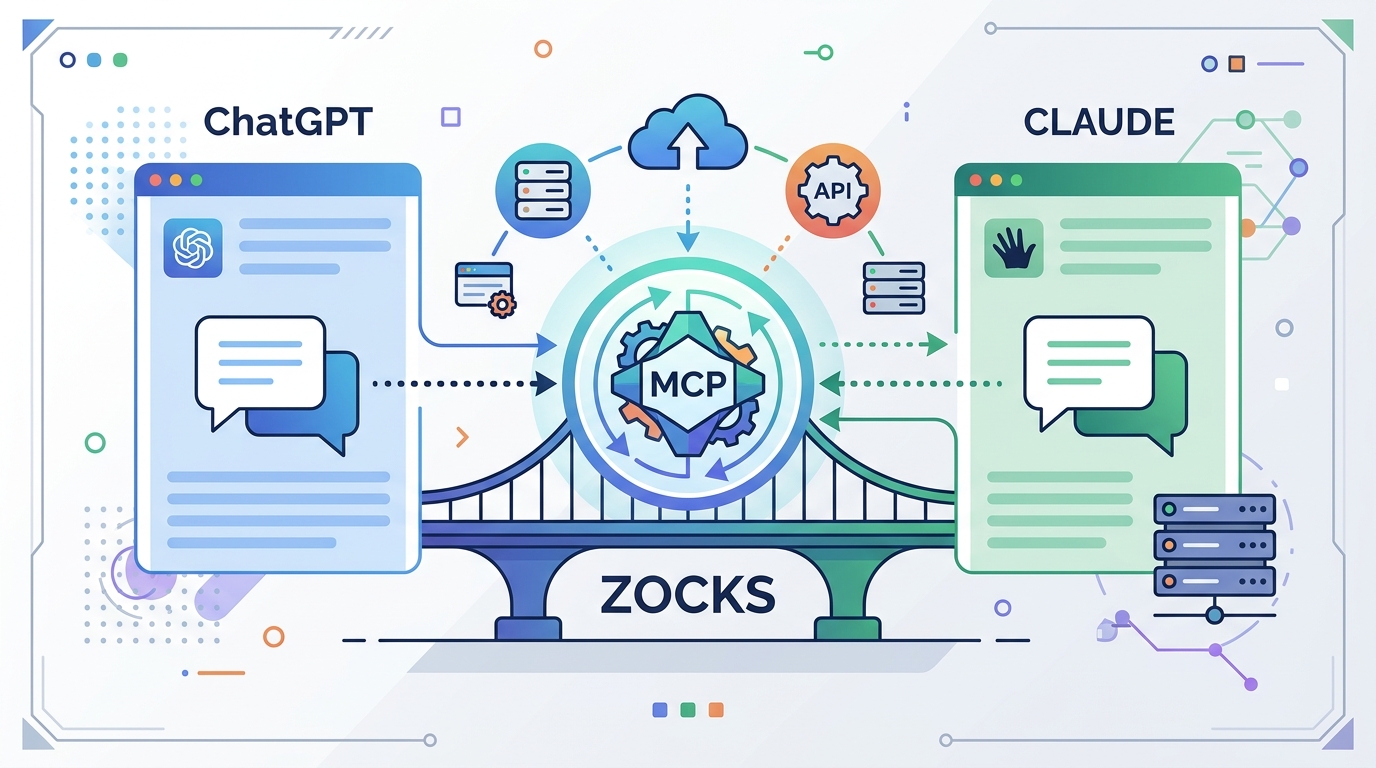
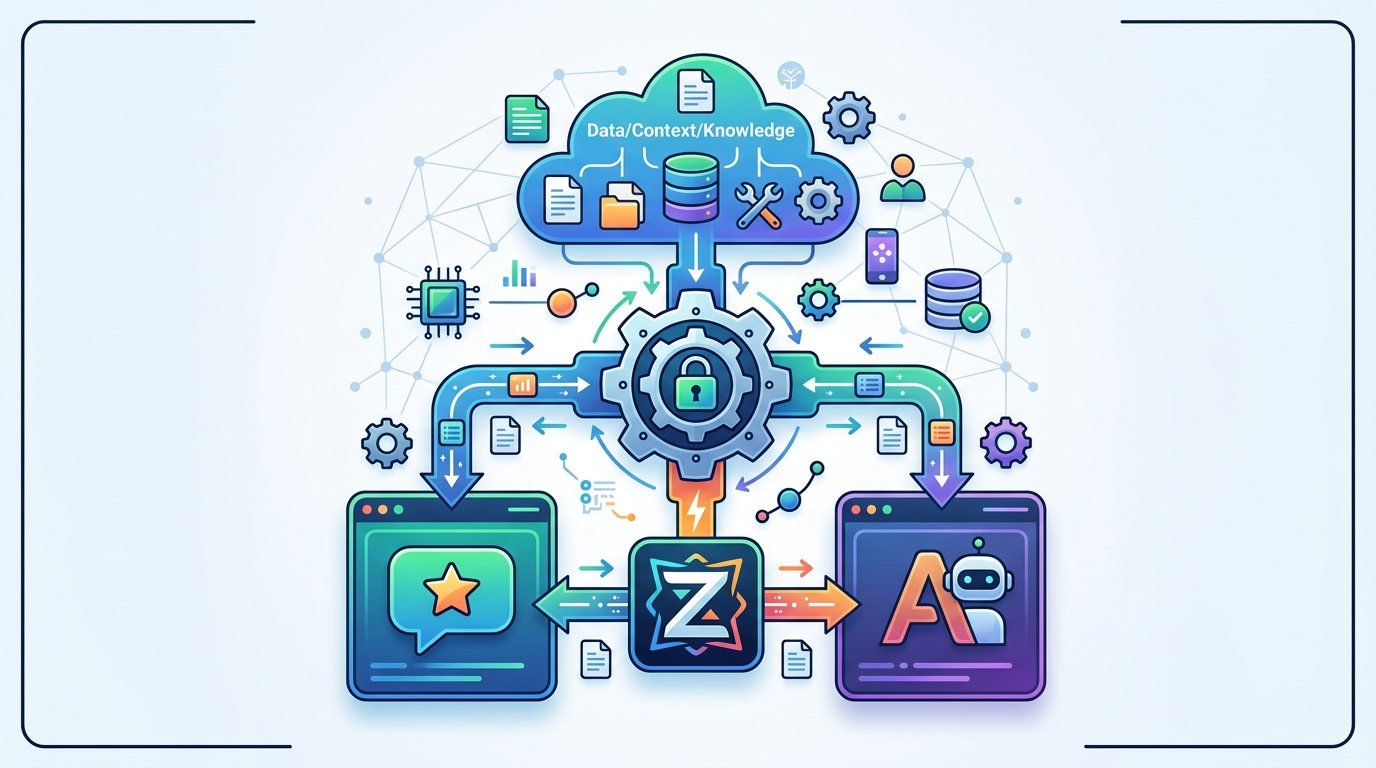
The company says its platform already turns conversations, meetings, email, and documents into structured data that gets richer over time. Zocks MCP then exposes that context to AI tools in a controlled way, with authentication, access controls, and auditability built in. For firms that care about supervision and recordkeeping, that last part is the whole story.
- Zocks says the connector works with ChatGPT and Claude.
- The system is built on Model Context Protocol, an open protocol for AI-to-data connections.
- Zocks says its platform converts meetings, email, and documents into searchable client context.
- The company says the workflow is designed to reduce copy-paste handoffs that create compliance risk.
- Zocks recently added Cetera as a partner, giving it access to about 12,000 financial professionals and institutions.
That last point matters because distribution often decides whether a workflow product becomes a niche feature or a standard part of advisor operations. A connector is useful only if it fits the systems firms already trust, and Zocks is clearly trying to make that case.
Why advisors care about governed AI inputs
The problem Zocks is trying to solve is easy to recognize if you have watched advisors experiment with AI over the past year. They want fast summaries, better prep, and cleaner follow-up notes, but they also need client context to stay inside approved systems. Copying and pasting into a public AI tool may feel efficient, yet it creates a trail of manual steps that compliance teams dislike and operations teams have to clean up later.
Mark Gilbert, CEO of Zocks, put the company’s view in a statement:
“AI tools like Claude have fundamentally changed the way we process information and the speed at which we work, but these tools are only as useful as the inputs and context they can access.”
That quote gets to the heart of the product. The model may be smart, but the output is only as good as the data it can see. For advisors, that means household history, tax concerns, estate planning notes, insurance gaps, and meeting follow-ups need to be available in a governed workflow if the AI is going to do real work instead of generic drafting.
Zocks says the connector can help advisors review a household’s history for changes, pull every tax topic raised in recent meetings, and flag estate or insurance issues that were discussed but never completed. Those are practical use cases, and they are the kind that can save time without forcing a firm to hand over its entire process to a consumer AI app.
How this compares with other advisor AI moves
Zocks is not the only firm trying to turn meeting data into something more useful. The broader advisor-tech market is moving fast, but the approaches differ. Some firms buy specialist vendors, some build in-house, and some try to keep the workflow inside a proprietary stack.
Bank of America Private Bank recently said its own AI solution, Meeting Journey, could save up to four hours per meeting across the millions of conversations its advisors handle each year. Shimna Sameer, head of Products, Solutions & Platforms at Bank of America Private Bank, said in a statement that early users of the Meeting Prep and Meeting Summarization features were already seeing “significant improvements” in workflows.
That is a very different model from Zocks. Bank of America is building for an internal advisor population, while Zocks is trying to be the connective tissue between client intelligence and third-party AI tools. Both paths point to the same conclusion: firms want AI to reduce prep time, but they want control over where client data lives.
- Meeting Journey targets an internal advisor workflow at a large private bank.
- Zocks is building a connector that works across outside AI tools.
- Cetera gives Zocks access to a network of roughly 12,000 professionals and institutions.
- eMoney Advisor is pushing client-facing portal branding, which is a different slice of the advisor tech stack.
There is also a strategic difference in what each vendor is optimizing for. Meeting assistants reduce note-taking friction. Connectors reduce context friction. Client portals reduce presentation friction. The firms that win will probably be the ones that make those layers talk to each other without creating extra admin work.
eMoney and Capitalize show where the pressure is
The same InvestmentNews roundup also shows two other pressure points in wealth tech. eMoney Advisor expanded branding controls for its Premium Client Portal across web and mobile, including themes, colors, and mobile app icon design. The company says more than 1,600 firms have adopted the portal since launch last year.
eMoney also shared survey data from users: 82% reported improved client engagement, 78% reported stronger collaboration, and 61% reported increased planning activity tied to the portal. Those numbers are self-reported, so they are not the same as audited performance data, but they do show where firms see value: a cleaner front door for clients and a better place to keep planning conversations active.
Then there is Capitalize for Advisors, a new platform aimed at held-away 401(k) rollovers. The company says it surveyed 966 U.S. financial advisors and found almost two-thirds view rollovers as both a major growth source and a top operational headache. Nearly 50% said they set minimum balance thresholds before helping clients consolidate old accounts, and almost 90% said they want a better solution.
- Capitalize says about $1 trillion in 401(k) assets roll over each year.
- The firm says nearly $2.1 trillion remains stranded in forgotten 401(k)s.
- eMoney says more than 1,600 firms have adopted its Premium Client Portal.
- eMoney’s survey found 82% improved engagement, 78% stronger collaboration, and 61% more planning activity.
Those numbers help explain why advisor tech keeps fragmenting into specialized products. One tool is trying to solve client communication. Another is trying to solve meeting context. Another is trying to solve rollover operations. The common thread is that advisors are paying for software that removes manual steps from revenue-generating work.
What this means for advisor stacks in 2026
Zocks MCP is interesting because it treats AI like an interface layer, not a destination. That is a healthier way to think about these tools. Advisors do not need one giant chatbot that knows everything; they need controlled access to the right context at the right time, with logs and permissions that compliance teams can live with.
If Zocks executes well, the next wave of advisor AI products will look less like standalone assistants and more like protocol-driven plumbing. The firms that matter will be the ones that can connect client data, meeting intelligence, and action workflows without making advisors babysit the process.
My read: the real test is whether firms adopt connectors like Zocks MCP as a standard part of their stack over the next 12 months, or whether they keep treating AI as a separate experiment. If the former happens, advisor software vendors will need to expose more data through governed protocols. If the latter happens, the copy-paste problem will keep eating the time savings AI promises to deliver.
Either way, the question for advisory firms is simple: do you want AI to sit outside your systems, or do you want it to work with the data you already trust?
// Related Articles
- [TOOLS]
Aliyun Bailian Token Plan turns credits into agents
- [TOOLS]
One API gateway turns six AI APIs into one
- [TOOLS]
OpenAI FDEs turn broken agents into shipped systems
- [TOOLS]
Anthropic’s daily brief turns news into a workflow
- [TOOLS]
Claude Reflect turns usage into retention
- [TOOLS]
Midjourney turns prompt ideas into art