llama.cpp adds local LLM inference in C/C++
ggml-org’s llama.cpp keeps expanding local LLM support with OpenAI-compatible serving, browser WebGPU, and broad hardware backends.

llama.cpp provides local LLM inference in C/C++ with broad hardware support and server mode.
llama.cpp from ggml-org positions itself as a low-dependency runtime for running large language models on laptops, desktops, servers, and browsers. The project’s README highlights local model loading, Hugging Face downloads, and an OpenAI-compatible API server, with support for Apple silicon, x86, RISC-V, NVIDIA CUDA, AMD HIP, Vulkan, SYCL, and WebGPU.
| 項目 | 數值 |
|---|---|
| GitHub stars | 112k |
| GitHub forks | 18.6k |
| Open issues | 697 |
| Open pull requests | 1k |
| Commits | 9,293 |
What changed
Get the latest AI news in your inbox
Weekly picks of model releases, tools, and deep dives — no spam, unsubscribe anytime.
No spam. Unsubscribe at any time.
The repository now emphasizes three practical entry points: run a local llama-cli model file, pull a model directly from Hugging Face, or start llama-server for an OpenAI-compatible endpoint. That makes the project usable both as a developer tool and as a drop-in inference layer for local apps.
The codebase is still centered on plain C/C++ with no required third-party stack, but the hardware matrix is wide. The README lists optimized paths for Apple silicon, x86 instruction sets, RISC-V extensions, and GPU backends including CUDA, HIP, Metal, Vulkan, SYCL, and WebGPU.
- Local inference via llama-cli
- Model download and run from Hugging Face
- OpenAI-compatible API via llama-server
- Browser support through WebGPU
Why it matters
For developers, the appeal is control: run models locally, avoid shipping a heavy runtime, and choose the hardware path that fits the machine. That matters for offline tools, privacy-sensitive deployments, edge devices, and teams that want a single inference layer across mixed environments.
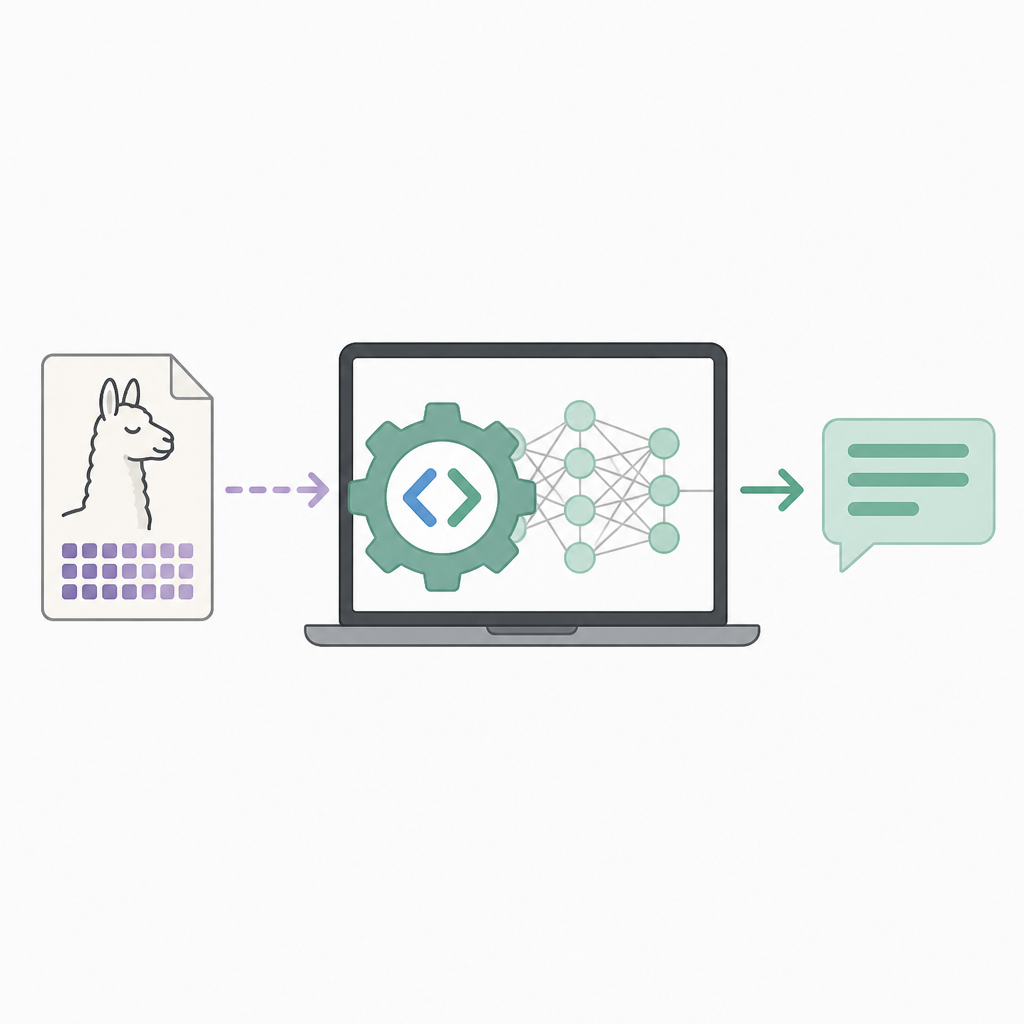
For the market, llama.cpp keeps acting as a reference implementation for portable inference. Its long list of supported models and bindings across Python, Go, Node.js, Rust, Java, Swift, and more shows how often other tools build on top of it rather than replace it.
The practical question is not whether local inference is possible, but which stack makes it easiest to ship. llama.cpp is still trying to be the default answer for that choice.
// Related Articles
- [TOOLS]
Nvidia and LG turn AI plans into a playbook
- [TOOLS]
Ollama is the best free AI path in 2026 for real work
- [TOOLS]
This MLOps list turns chaos into a stack
- [TOOLS]
BentoML turns model serving into Python APIs
- [TOOLS]
Magenta RealTime 2 lets you score in the DAW
- [TOOLS]
Open-source AI tools beat Claude’s paid tiers on value