8 Hidden Claude Code Features in the Leaked Source
Claude Code’s leaked source exposed 8 undocumented features, from agent memory to permission controls, with clues about Anthropic’s next moves.
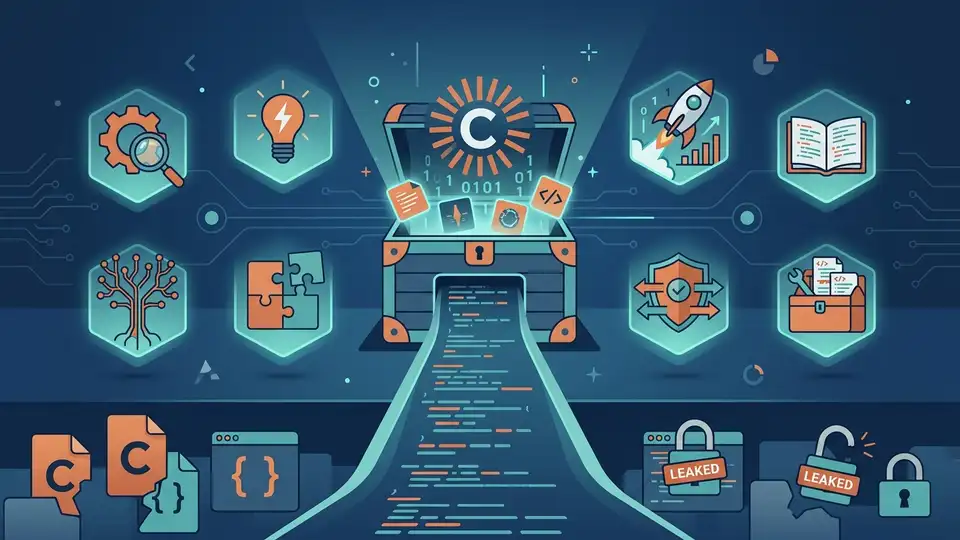
Claude Code had a rough week. Its source code leaked after a very basic mistake, and that gave developers a rare look at how Anthropic’s coding agent is built under the hood. The leak also surfaced a set of hidden features that never made it into the polished product docs.
That matters because Claude Code is not a toy demo. It is Anthropic’s terminal-based coding assistant, and it sits in the same fast-moving category as OpenAI Codex and GitHub Copilot. When source leaks reveal internal flags, workflows, and agent behavior, the whole developer tooling market gets a better map of where these products are heading.
What the leak actually exposed
Get the latest AI news in your inbox
Weekly picks of model releases, tools, and deep dives — no spam, unsubscribe anytime.
No spam. Unsubscribe at any time.
The leaked source does not just show a few implementation details. It reveals product choices Anthropic has been testing behind the scenes, including controls for agent behavior, memory handling, and task execution. If you build AI tools, that is the interesting part: not the marketing surface, but the mechanics that decide whether an assistant feels useful or annoying.
The biggest takeaway is simple. Claude Code is being shaped less like a chat box and more like an operating layer for coding tasks. That means the hidden features are not random extras. They are clues about how Anthropic expects developers to work with agents in real projects.
- Internal flags point to experimental behaviors that were not shipped in the public UI.
- Several features appear aimed at long-running coding sessions rather than one-off prompts.
- The code suggests tighter control over when the agent can act on its own.
- Some hooks look designed for team workflows, not just solo terminal use.
One reason this leak got so much attention is that Anthropic has been very deliberate about Claude Code’s public presentation. The product has been positioned as a practical coding companion, but the source hints at a much more opinionated system underneath that surface.
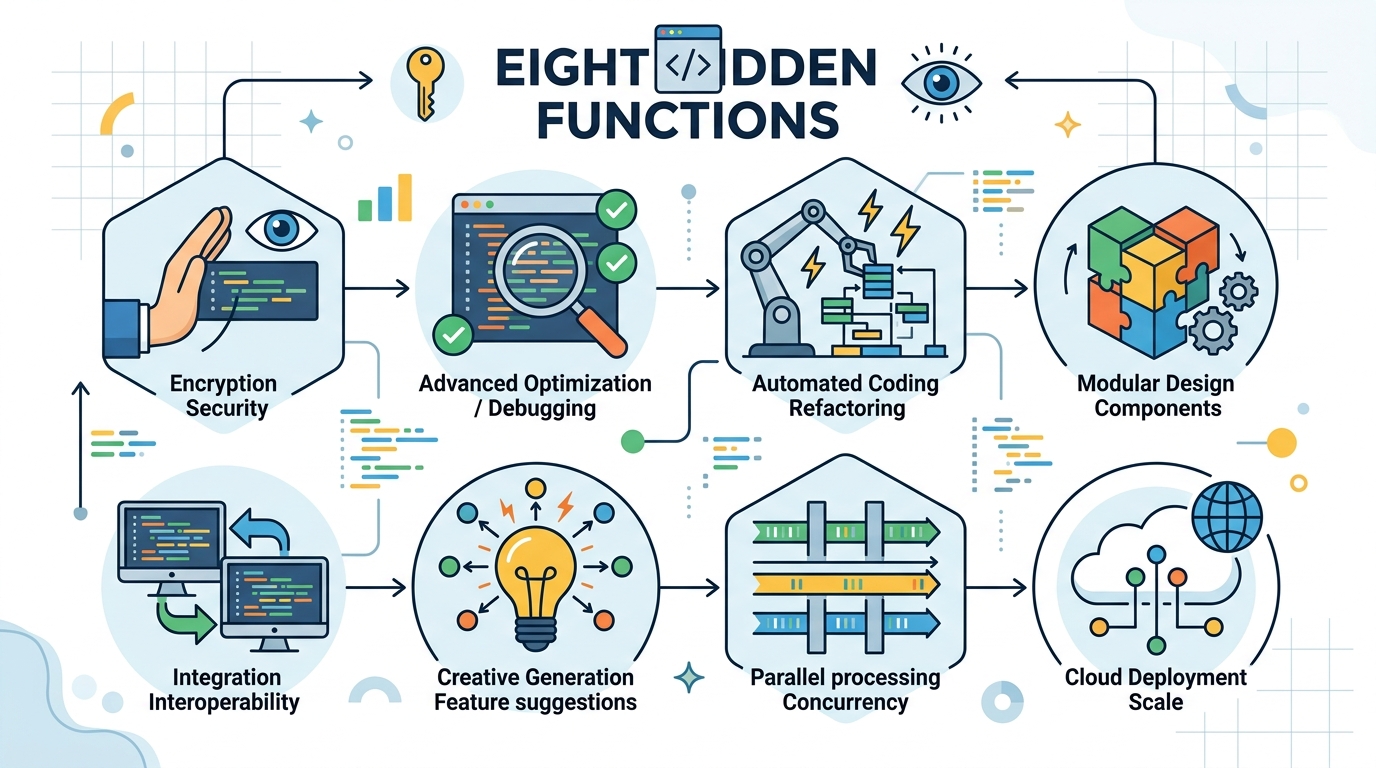
Eight hidden features worth paying attention to
Here is the part developers care about: the hidden features in the source line up with real pain points in agentic coding. They suggest Anthropic has been testing ways to make Claude Code more stateful, more controllable, and more useful over long sessions.
“It is better to have the right answer to the wrong question than the wrong answer to the right question.” — J. Christopher Burke
That quote fits agent tools surprisingly well. The hard part is not getting a model to talk. The hard part is getting it to act at the right time, with the right permissions, and with the right context. The leaked code suggests Claude Code is being tuned around exactly that problem.
- Persistent task memory: internal logic hints at longer-lived state across sessions, so the agent can remember what it was doing instead of starting from zero every time.
- Permission gating: code paths suggest more granular approval checks before the agent edits files or runs commands.
- Background execution: some hooks point to work that continues while the user is doing something else in the terminal.
- Context routing: the source suggests Claude Code may sort different kinds of project data into separate channels before feeding them to the model.
- Tool selection logic: there are signs of internal decision rules for choosing which tool to call, instead of relying on a single generic path.
- Session recovery: the code appears to support resuming interrupted work with less loss of state.
- Policy-aware actions: some pieces look built to respect org-level rules, which matters for enterprise use.
- Workflow presets: the source hints at task-specific modes that could change how the agent behaves for debugging, refactoring, or review.
These are the kinds of details that separate a flashy demo from a tool developers can trust. A coding agent becomes useful when it can keep track of what happened, ask for approval at the right moment, and avoid wandering off into unrelated changes.
Why these hidden features matter for developers
From a product point of view, the leak shows Anthropic is thinking beyond autocomplete. Claude Code is being built around the messy reality of software work: unfinished tasks, partial context, permission boundaries, and the need to come back later without re-explaining everything.
That lines up with the current direction of AI coding tools. Cursor, Windsurf, and Copilot all compete on speed and convenience, but the next layer of competition is control. Who can remember more, break less, and stay inside the boundaries a team sets?
For developers, the hidden features also hint at a practical tradeoff. More autonomy can save time, but it also increases the risk of bad edits, accidental command execution, or stale context. Anthropic seems to be testing ways to reduce that risk by making the agent more explicit about what it is doing and why.
That is where the source leak becomes more than gossip. It is a snapshot of product strategy. Anthropic appears to be treating Claude Code as an agent platform, not just a code helper. If that is accurate, then future releases may focus less on flashy prompt tricks and more on state, policy, and workflows.
- Memory helps with long refactors: fewer repeated instructions, less re-explaining the repo.
- Approval controls help teams: admins can set safer defaults for shared environments.
- Workflow presets help specialists: debugging and review need different behavior than feature writing.
- Session recovery helps real work: interrupted terminal sessions are normal, not rare.
There is also a broader market signal here. If Anthropic is investing in hidden agent controls, competitors will respond with similar features. The real competition is no longer about who can answer a coding question fastest. It is about who can manage a project with the least friction and the fewest mistakes.
What to watch next
The leaked source will probably get picked over for weeks, but the more important question is what Anthropic turns into public product. If even half of these hidden features ship in a polished form, Claude Code could move from a terminal assistant into a much more capable project partner for solo developers and teams alike.
My guess: the next visible upgrades will focus on memory, permission controls, and resumable workflows, because those solve obvious pain points without forcing users to change habits. If Anthropic gets that right, the real question for developers is not whether to try agentic coding tools, but which one can survive contact with a messy repo and a real deadline.
For now, the leak gives us a useful reminder. The most interesting AI products are often the ones with the most work hidden behind the curtain, and Claude Code just showed a lot more of that curtain than Anthropic probably wanted.
If you want more coverage of coding agents and developer tools, check our related OraCore.dev piece on terminal-based AI coding agents.
// Related Articles
- [TOOLS]
Aliyun Bailian Token Plan turns credits into agents
- [TOOLS]
One API gateway turns six AI APIs into one
- [TOOLS]
OpenAI FDEs turn broken agents into shipped systems
- [TOOLS]
Anthropic’s daily brief turns news into a workflow
- [TOOLS]
Claude Reflect turns usage into retention
- [TOOLS]
Midjourney turns prompt ideas into art