Banana Pi BPI-SM10: RISC-V Board for Local AI
Banana Pi’s BPI-SM10 pairs a RISC-V chip with up to 60 TOPS for local AI, plus USB 3.0, Gigabit Ethernet, and M.2 slots.
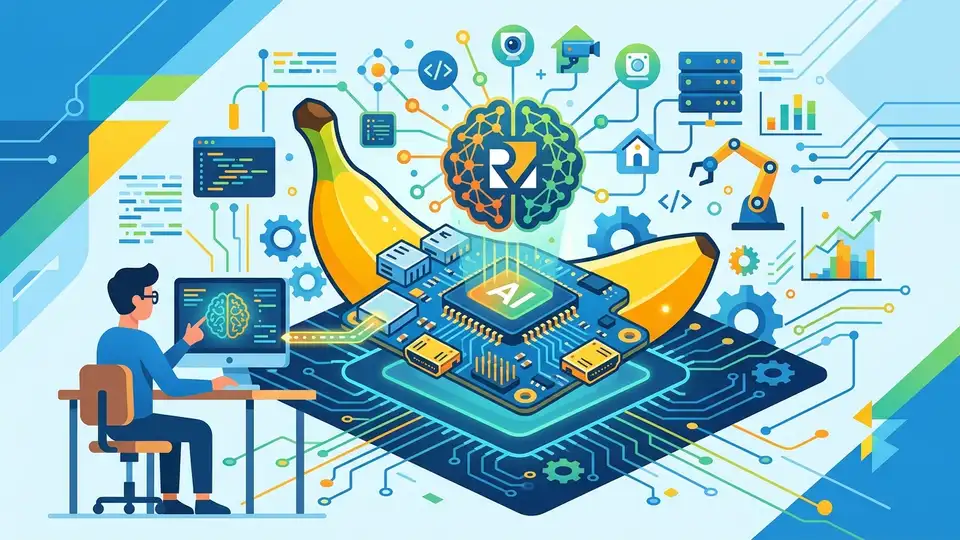
Banana Pi’s BPI-SM10 is a RISC-V single-board computer built for local AI workloads.
Banana Pi has a new board on the way, and the headline number is hard to ignore: up to 60 TOPS of AI performance. The Banana Pi BPI-SM10 is aimed at people who want more than a basic hobby SBC, and it does that by pairing a RISC-V processor with a carrier board full of practical I/O.
That matters because this is not trying to be a Raspberry Pi 5 clone. It uses the SpacemiT K3, which gives it eight X100 CPU cores clocked up to 2.4 GHz, eight A100 AI cores, and memory options that go well beyond the entry-level boards many makers are used to.
| Spec | Value |
|---|---|
| CPU | SpacemiT K3 with 8 X100 cores |
| Max CPU clock | Up to 2.4 GHz |
| AI acceleration | 8 A100 cores, up to 60 TOPS |
| Memory | 8 GB, 16 GB, or 32 GB LPDDR5 |
| Power draw | 18 W to 35 W |
| Storage and I/O | 4x USB 3.0, Gigabit Ethernet, DisplayPort, MIPI-DSI, M.2 slots |
What Banana Pi is actually shipping
Get the latest AI news in your inbox
Weekly picks of model releases, tools, and deep dives — no spam, unsubscribe anytime.
No spam. Unsubscribe at any time.
The BPI-SM10 is a little unusual in SBC terms. Banana Pi is treating it more like a compute module plus carrier board than a classic all-in-one board, which explains why the useful ports live on the carrier board instead of the core module itself.
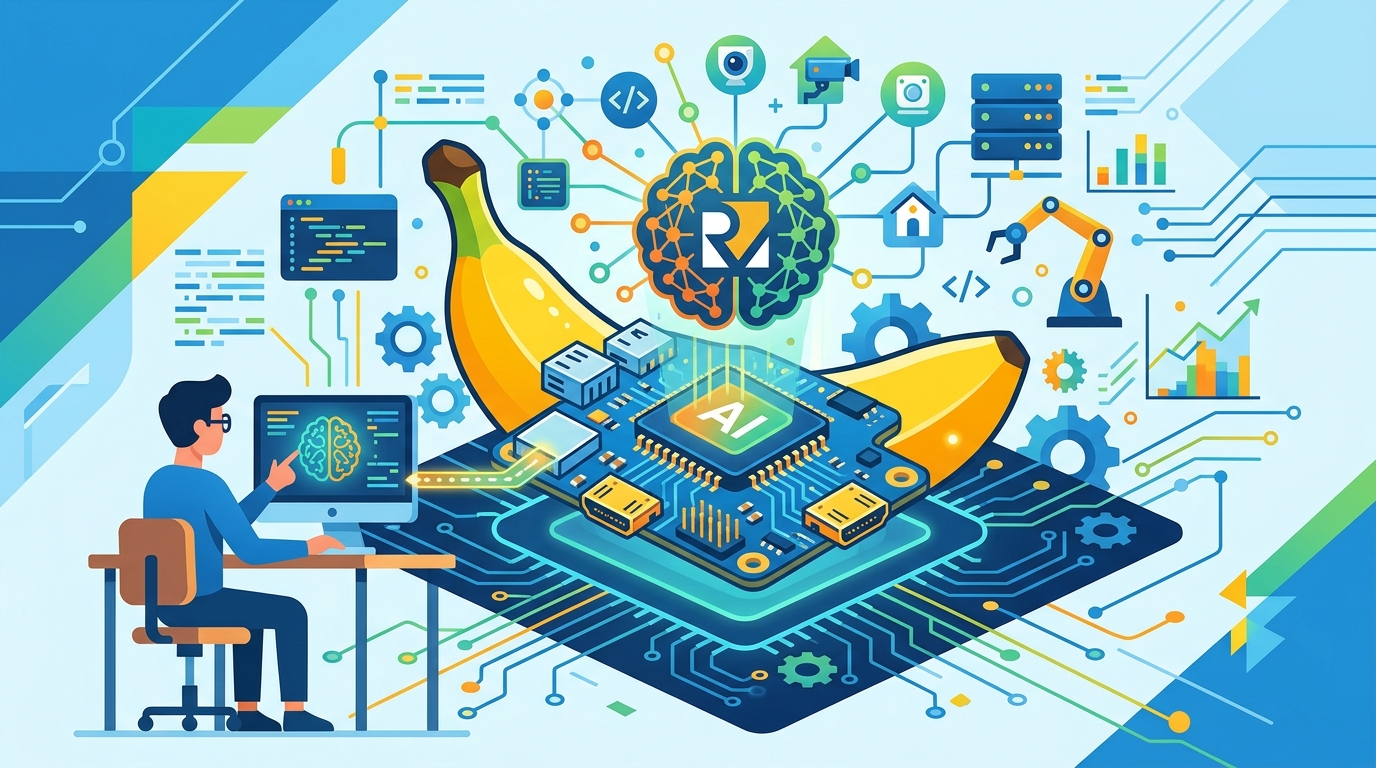
On the outside, the board looks practical rather than flashy. You get four USB 3.0 ports, Gigabit Ethernet, DisplayPort, MIPI-DSI, and several M.2 slots for SSDs or add-on hardware. There is also a GPIO header, so it still fits the maker crowd that expects direct access to pins and peripherals.
That mix makes the BPI-SM10 more interesting than a spec-sheet curiosity. It can act like a compact desktop, a home lab box, or an AI edge device, depending on how Banana Pi prices it and how much software support ships with it.
- 4x USB 3.0 ports for peripherals and storage
- Gigabit Ethernet for wired networking
- DisplayPort and MIPI-DSI for display output
- Multiple M.2 slots for SSD expansion
Why the RISC-V angle matters
RISC-V still has a smaller ecosystem than ARM, and that is the tradeoff here. A Raspberry Pi 5 is easier to recommend because the software support, community guides, and accessory ecosystem are already huge. The BPI-SM10 instead bets on raw capability and open instruction-set appeal.
For developers, that makes the board more compelling than it may look at first glance. If you are experimenting with local inference, edge workloads, or custom Linux builds, a RISC-V SBC with dedicated AI cores gives you a different kind of lab machine than the usual ARM boards.
“There are two major trends in computing today: open hardware and artificial intelligence,” said RISC-V International CEO Andrea Gallo in 2024.
The quote fits this board well. Banana Pi is not just chasing benchmark bragging rights; it is betting that developers want hardware that can run modern models locally without needing a cloud connection for every test.
That said, the software stack will decide how useful the board feels in practice. Sixty TOPS sounds impressive, but AI hardware is only as good as the toolchains, drivers, and model support around it. If Banana Pi and SpacemiT keep the software side clean, the BPI-SM10 could get real traction outside the usual maker niche.
How it compares with the boards people already know
The easiest comparison is the Raspberry Pi 5, which is still the default answer for many SBC buyers. The Pi 5 is cheaper, better documented, and easier for beginners. The BPI-SM10 is trying to win on compute density and AI acceleration instead.
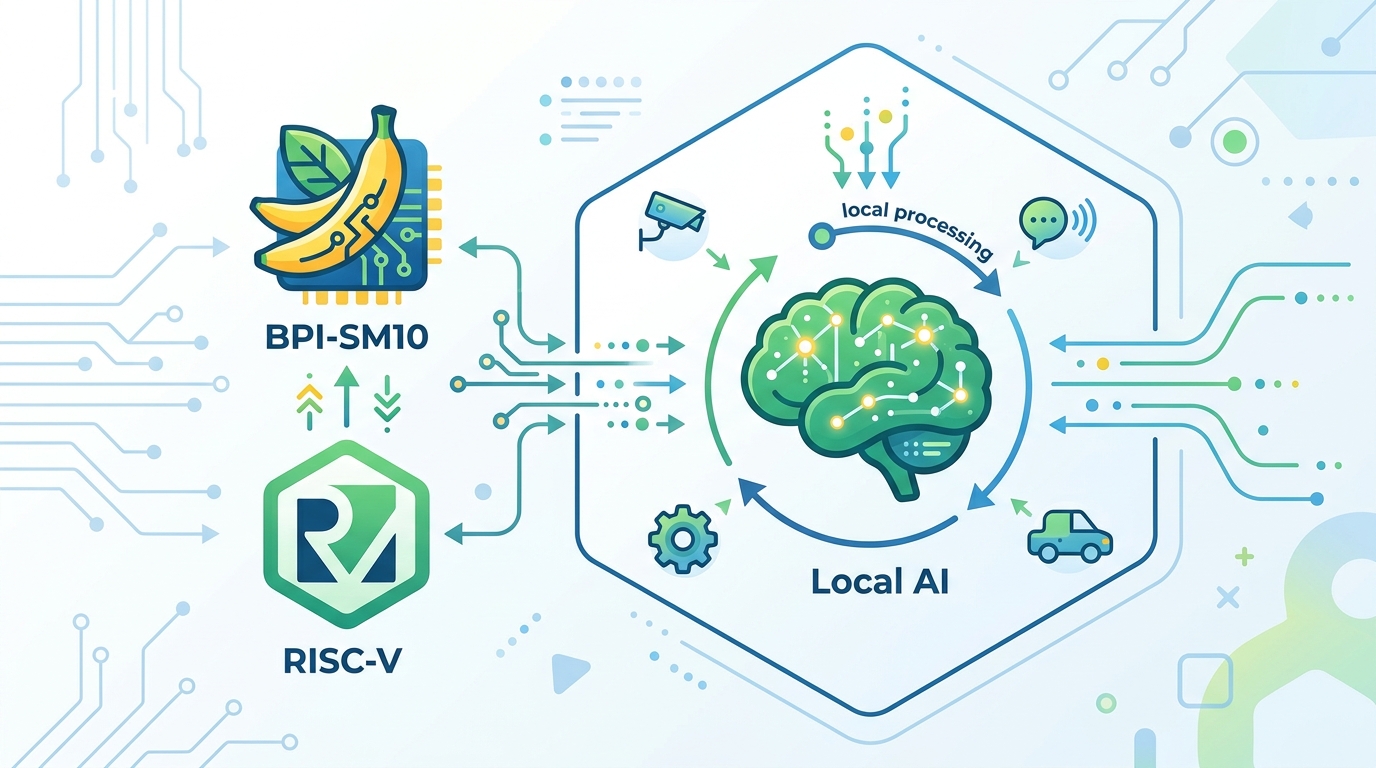
Another comparison point is Nvidia’s Jetson family. Jetson boards already have a strong reputation for edge AI, and Banana Pi is clearly aiming at some of that same audience. The difference is architectural: RISC-V instead of ARM, and a setup that may attract developers who want to test software on a non-ARM platform.
- Raspberry Pi 5: better ecosystem, easier entry point
- Banana Pi BPI-SM10: up to 60 TOPS, 8 to 32 GB LPDDR5, more AI focus
- Nvidia Jetson: mature edge-AI software stack, stronger known path for deployment
- BPI-SM10 power range: 18 W to 35 W, which is far above low-power hobby boards
That last number matters. An 18 W to 35 W range puts the BPI-SM10 in a different class from the tiny SBCs people run from phone chargers. This is a board that wants active cooling, a real power supply, and a workload that justifies the extra heat.
What to watch next
The BPI-SM10 is interesting because it points to where SBCs are heading for power users: less “tiny computer for blinking LEDs,” more “compact box for local AI and storage.” If Banana Pi ships good Linux support and sensible pricing, this board could become a serious option for developers who want RISC-V plus AI acceleration in one package.
The open question is whether the software stack arrives with the hardware or lags behind it. If the tooling is ready, the BPI-SM10 could pull in AI hobbyists, edge-computing tinkerers, and Linux developers looking for something different from ARM. If not, it will remain a very interesting board on paper.
For now, the safe takeaway is simple: if you are shopping for a Raspberry Pi 5 alternative and care about local AI more than community size, this is one of the few upcoming boards worth watching closely.
Related reading: Banana Pi launches new SBC with extensive features and Banana Pi launches new SBC with Nvidia Jetson Nano compatibility.
// Related Articles
- [TOOLS]
Aliyun Bailian Token Plan turns credits into agents
- [TOOLS]
One API gateway turns six AI APIs into one
- [TOOLS]
OpenAI FDEs turn broken agents into shipped systems
- [TOOLS]
Anthropic’s daily brief turns news into a workflow
- [TOOLS]
Claude Reflect turns usage into retention
- [TOOLS]
Midjourney turns prompt ideas into art