Why GPT Image 2 Production Safety Matters More Than Speed
GPT Image 2 should be shipped with moderation, logging, and human review before speed or polish.

GPT Image 2 should be shipped with moderation, logging, and human review before speed or polish.
GPT Image 2 is not a “ship it and forget it” API; the teams that win with it will be the ones that treat safety and observability as the product, not as cleanup.
I am taking a hard position because the evidence is already there. OpenAI’s own guidance says to run user prompts through moderation before generation, set the image API moderation parameter to auto, log flagged requests, and add human review for high-stakes use cases. That is not belt-and-suspenders theater. It is the operating model for any team that expects real users, real abuse, and real cost exposure. The moment you put an image generator behind a public button, your risk surface expands from “bad prompt” to “policy violation, brand damage, surprise spend, and incident response.”
First argument: safety controls are cheaper than failure
Get the latest AI news in your inbox
Weekly picks of model releases, tools, and deep dives — no spam, unsubscribe anytime.
No spam. Unsubscribe at any time.
The first reason to prioritize safety is simple economics. A blocked request costs less than a generated violation, and a generated violation costs less than a public incident. The article’s recommendation to pre-screen prompts with omni-moderation-latest before sending them to gpt-image-2 is the right call because it prevents you from paying for bad traffic twice, once in compute and again in cleanup.
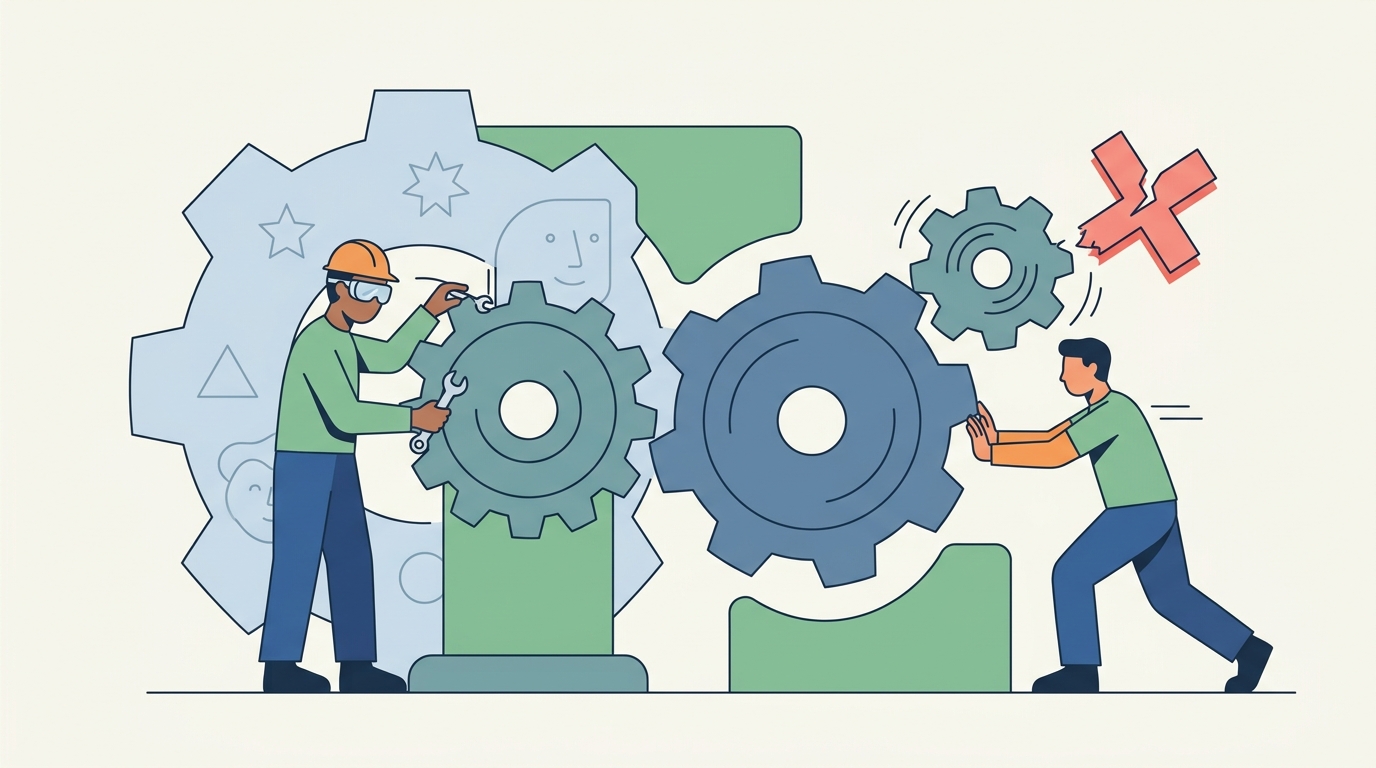
There is also a practical implementation detail that matters: the image endpoint’s built-in moderation setting should stay at auto. That default exists for a reason. If your team relaxes it to chase fewer false positives, you are not “improving UX,” you are widening the gap between what users ask for and what your system should allow. For consumer products, that gap becomes an abuse channel fast.
Second argument: logging is not optional if you want to operate at scale
Image generation is slow enough and variable enough that you need a paper trail. OpenAI says complex prompts can take up to two minutes, and the article recommends logging model snapshot ID, size, quality, token counts, latency, request ID, retry count, moderation outcome, and estimated cost. That is the minimum useful dataset for debugging, forecasting, and abuse review.
Without that telemetry, every problem becomes a guessing game. If a request fails, you will not know whether the issue was moderation, rate limiting, prompt length, or model behavior drift. If spend spikes, you will not know whether the culprit was a new feature, a customer cohort, or an engineer quietly turning n up to 4. Logging is not bureaucracy here. It is the only way to connect product decisions to operational reality.
Third argument: human review belongs on high-stakes surfaces
The strongest case for human review is not theoretical. The article explicitly calls out high-stakes surfaces, and that is the right boundary. If the output can affect employment, medical decisions, identity, legal status, or financial trust, automated moderation alone is not enough. These are exactly the places where a plausible-looking image can do the most damage.
Red-teaming before launch belongs in the same bucket. Teams often assume image systems are safer than text systems because the output is visual and therefore “obvious.” That is wrong. Visual manipulation can be more persuasive than prose, and a single unsafe output can travel farther than a hundred ordinary prompts. If you are building for anything beyond casual creativity, the launch checklist should include adversarial testing, escalation paths, and a named reviewer for edge cases.
The counter-argument
The best objection is speed. A product team can say that adding a moderation pipeline, request logging, and human review slows feature delivery, increases engineering overhead, and introduces friction into a workflow that is supposed to feel instant. That objection is not silly. For a low-risk creative tool, every extra gate can reduce conversion and make the feature feel heavier than the user expects.
There is also a legitimate concern about false positives. Automated moderation can block harmless prompts, especially when users are experimenting, using slang, or working in sensitive creative domains. If the team overcorrects, it can frustrate legitimate users and push them toward competitors with looser rules.
That said, the counter-argument fails as a production strategy because it treats safety as a tax instead of a design constraint. The article’s guidance is not to build a giant review bureaucracy. It is to use layered controls where they matter most: pre-moderate user input, keep the image API on auto moderation, log what was flagged, and reserve human review for high-stakes surfaces. That is a targeted system, not a universal slowdown. If your product cannot absorb that level of discipline, then it is not ready for public image generation.
What to do with this
If you are an engineer, wire moderation and logging into the first version, not the second. If you are a PM, define which surfaces require human review before launch, not after the first incident. If you are a founder, budget for safety the same way you budget for uptime: as a core product capability. The winning posture is not “move fast and patch later.” It is “ship deliberately, measure everything, and make unsafe output expensive to produce.”
// Related Articles
- [TOOLS]
OpenClaw with Ollama turns Telegram into a bot
- [TOOLS]
Aliyun Bailian Token Plan turns credits into agents
- [TOOLS]
One API gateway turns six AI APIs into one
- [TOOLS]
OpenAI FDEs turn broken agents into shipped systems
- [TOOLS]
Anthropic’s daily brief turns news into a workflow
- [TOOLS]
Claude Reflect turns usage into retention