Windsurf is becoming a model router, not just an IDE
Windsurf’s June 2026 releases show it is evolving into a model-routing platform, not a plain code editor.

Windsurf is evolving from an IDE into a model-routing platform for agentic coding.
Windsurf’s June 2026 release trail makes one thing clear: the product is no longer trying to win by being a better text editor, but by becoming the place where model choice, speed, and task orchestration are decided. The evidence is all over the changelog. In April, Windsurf introduced Adaptive, described as a smarter way to use the product with an adaptive model router. Before that and after it, the company kept layering in model-specific launches, from Claude Opus 4.7 fast mode to GPT-5.4, Gemini 3.1 Pro, Claude Sonnet 4.6, GPT-5.3-Codex-Spark, and more. Add the Agent Command Center, Devin in Windsurf, Arena Mode, and pricing tiers built around heavy usage, and the direction is unmistakable: Windsurf is turning the editor into a control plane for AI work.
Model routing is now the core product, not a side feature
Get the latest AI news in your inbox
Weekly picks of model releases, tools, and deep dives — no spam, unsubscribe anytime.
No spam. Unsubscribe at any time.
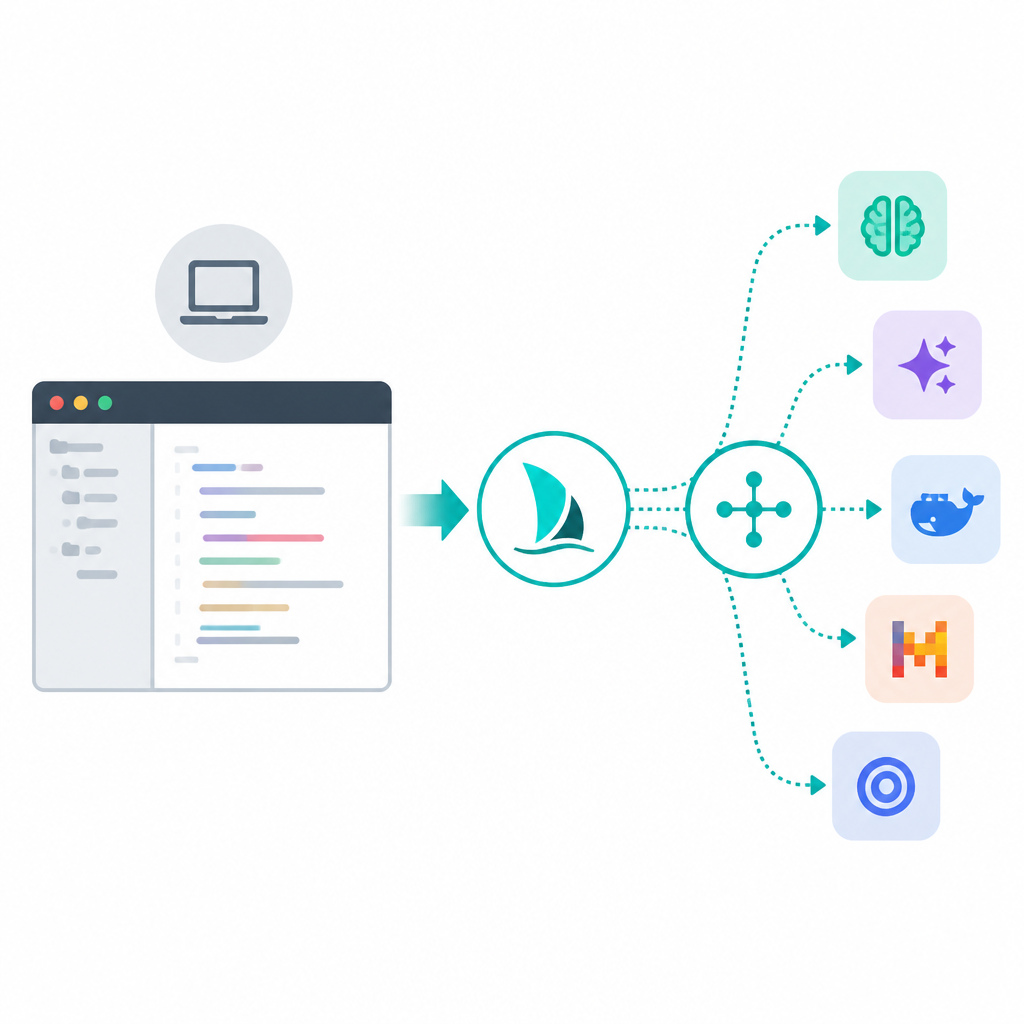
The Adaptive launch is the clearest signal. A model router is not a convenience layer; it is the product’s new brain. If the system can choose between fast, cheap, and high-reasoning paths for a coding task, then the user is no longer buying a single model experience. They are buying judgment. That is a major shift because the value moves from raw model access to orchestration, and orchestration is where durable software products live.
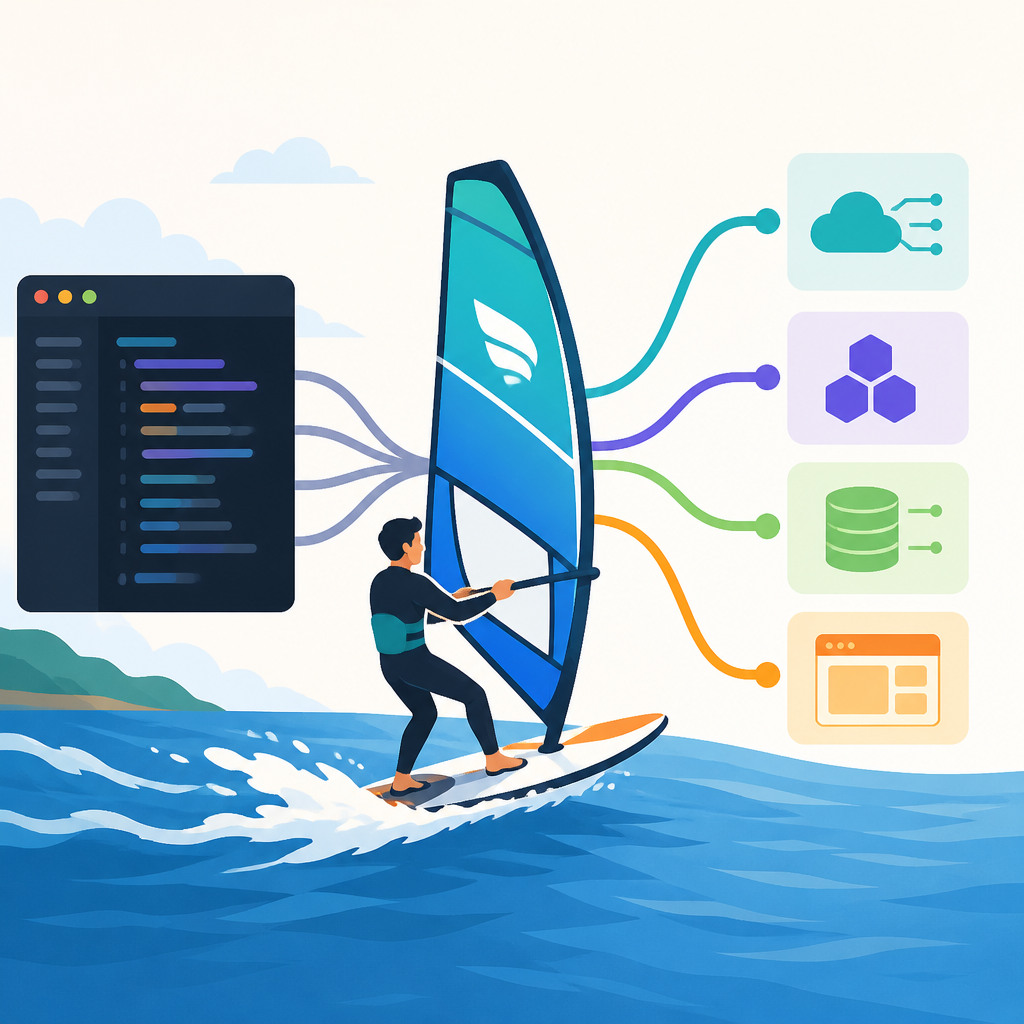
The release cadence backs this up. Windsurf has spent months shipping model after model with explicit performance positioning: Opus 4.7 fast mode claims ~2.5x higher output speeds, GPT-5.4 comes with multiple reasoning effort levels, and Sonnet 4.6 and GPT-5.3-Codex-Spark are framed around different speed and coding tradeoffs. This is not random catalog expansion. It is a portfolio strategy, and Adaptive is the layer that makes that portfolio usable at scale.
Agentic coding needs a control center, not a prettier editor
Windsurf 2.0 introduced the Agent Command Center and Devin in Windsurf, which tells you where the company sees the bottleneck. When agents generate more code, the hard part becomes supervising, reviewing, and steering the work. A traditional IDE is built for a human typing into files. A command center is built for a human managing multiple agentic workflows, and that distinction matters more every month as coding agents become more capable.
The company’s own product decisions show the same logic. Fast and Comprehensive Code Review arrived because verification became the bottleneck. Arena Mode arrived because users need side-by-side model comparison inside the workflow. Parallel agents, multi-pane Cascade, dedicated terminal support, and planning tools all point in the same direction: the modern developer does not need more autocomplete alone. They need a system that can coordinate generation, evaluation, and iteration without forcing them to stitch tools together manually.
The pricing changes prove Windsurf is optimizing for power users
The March 2026 pricing reset matters because it reveals the customer Windsurf is really designing for. Free, Pro, Teams, and Max is not the language of a lightweight editor. It is the language of a usage-intensive platform where the business model depends on frequent model calls, agent runs, and verification loops. The introduction of a Max plan for power users is especially telling. That is a direct bet that the most valuable customers are the ones pushing the system hardest, not the ones opening it occasionally to edit a file.
That same pattern appears in the promotional pricing attached to model launches. Windsurf repeatedly frames new model availability in terms of credits, discounts, and limited-time access. This is smart product economics. If the user experience is increasingly model-driven, then pricing has to track consumption, and consumption has to be easy to understand. The company is teaching users that model selection is part of the workflow budget, which is exactly what a model platform should do.
The counter-argument
The strongest objection is simple: Windsurf may be over-indexing on model churn and under-investing in the basics that make an IDE lovable. Developers still care about latency, stability, file navigation, terminal ergonomics, and trust. A product can pile on routing, benchmarking, and agent controls and still fail if the core editing experience feels noisy or fragile. There is also a real risk that abstraction hides too much. If the router chooses the model, the user may lose clarity about why a task was slow, expensive, or wrong.
That critique is valid, and it identifies the main trap in this strategy: routing without transparency becomes magic, and magic breaks trust. But Windsurf’s direction is still right because the market has already moved past the single-model IDE. The developer pain point is no longer just writing code faster. It is managing a fleet of models and agents without drowning in complexity. A product that ignores routing will be left as a shell around someone else’s intelligence layer. Windsurf is choosing to own that layer.
What to do with this
If you are an engineer, stop evaluating Windsurf as an editor and start evaluating it as an operating layer for AI-assisted development. Measure whether it reduces decision overhead, speeds up review, and makes model tradeoffs visible. If you are a PM or founder, the lesson is sharper: the winning dev tools in this cycle will not just add AI features, they will own orchestration, pricing, and verification around AI work. The editor is becoming the surface. The model router is becoming the product.
// Related Articles
- [TOOLS]
PyPI now accepts WASM wheels for Pyodide
- [TOOLS]
瑞萨全资收购Altium,PCB设计工具更新
- [TOOLS]
Rust forum week 25 turns ideas into shipping work
- [TOOLS]
Claude Code Rust trims TUI overhead to one binary
- [TOOLS]
Open source tools that make vibe coding safer
- [TOOLS]
Model triage turns coding tests into a cost win