Llama turns model releases into a playbook
I break down Llama's release strategy and give you a copy-ready template for shipping your own model notes.
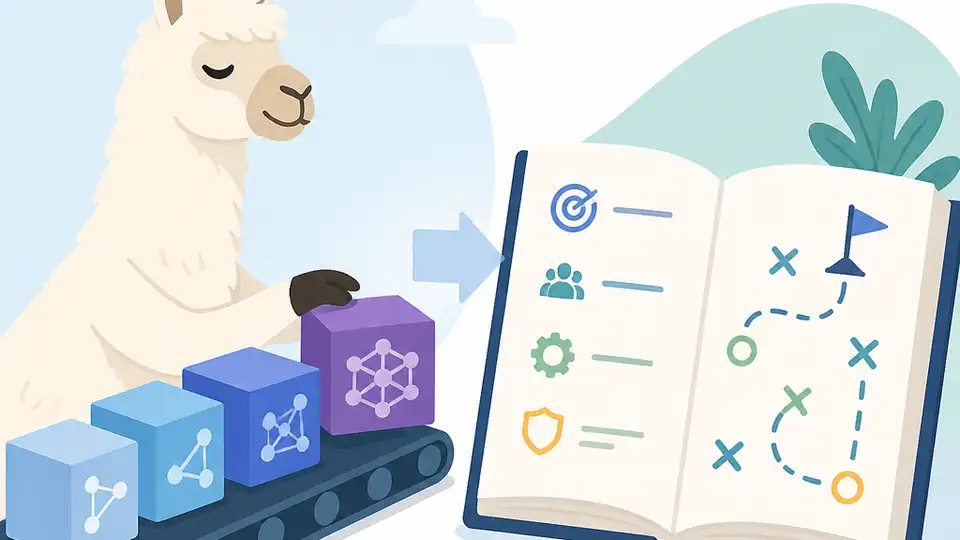
Llama shows how to package a model release into a usable developer playbook.
I've been following Llama since the first release, and honestly, it kept feeling weird in a very specific way. The model itself was never the whole story. What bugged me was the packaging: a foundation model here, an instruction-tuned variant there, a license caveat buried in the fine print, and a lot of energy spent arguing about whether it was “open” enough instead of making it easy to actually use. Then the leaks happened, the licensing got more complicated, and every new version came with a different mix of weights, chat tuning, context length, and commercial terms. As a developer, I don't want a family tree. I want a release note I can scan, a model card I can trust, and a decision path that tells me what I can ship without getting a legal headache or a benchmarking migraine.
That’s why I ended up reading the Wikipedia page for Llama (language model) like a postmortem, not a product page. The page pulls together the release history, the license fights, the architecture changes, and the weird little moments that mattered, like the leak and the benchmark claims around Llama 4. If you want the original source behind this breakdown, it’s the Wikipedia article plus the linked Meta materials and references it cites.
Stop treating a model release like a single file
Get the latest AI news in your inbox
Weekly picks of model releases, tools, and deep dives — no spam, unsubscribe anytime.
No spam. Unsubscribe at any time.
Llama models come in different sizes, ranging from 1 billion to 2 trillion parameters. Initially only a foundation model, starting with Llama 2, Meta AI released instruction fine-tuned versions alongside foundation models.
What this actually means is that a model release is not one artifact anymore. It’s a bundle: base weights, chat weights, size variants, license terms, and sometimes separate code or multimodal variants. Llama made that explicit early, and that’s part of why people kept talking about it. It wasn’t just “here’s the model.” It was “here’s the model family, and here’s which part you should use for which job.”
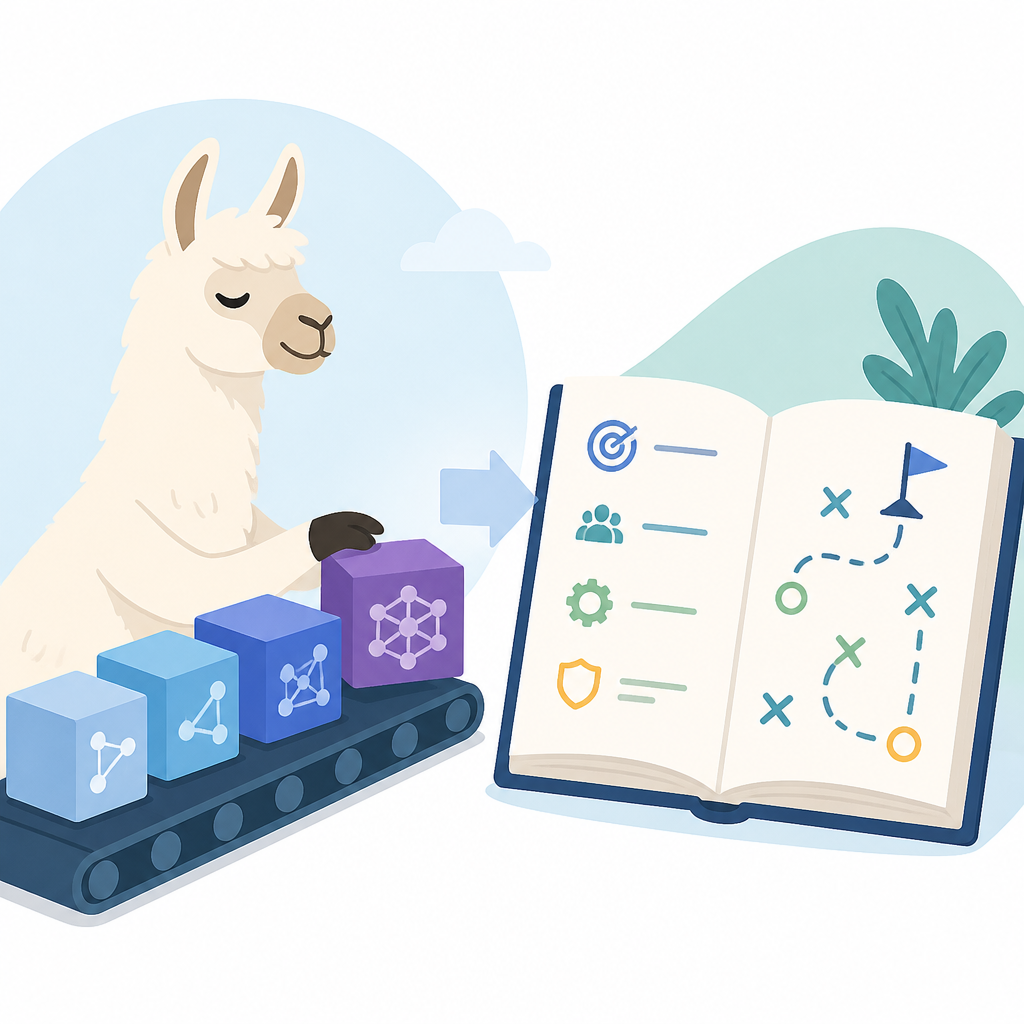
I ran into this same mess when I tried to standardize internal model docs for a team. Everyone kept asking the same sloppy question: “Which model is best?” That question is useless unless I know whether they need raw pretraining behavior, instruction-following behavior, code generation, or a small footprint for local inference. Llama’s release history forces that separation, which is annoying at first and helpful later.
How to apply it: when you document a model, split the release into separate lanes. I use four buckets:
- Base model: for research, fine-tuning, and controlled evaluation.
- Instruction model: for chat and assistant flows.
- Specialized variant: code, vision, multilingual, or long-context.
- Operational constraints: license, access, compute, and deployment notes.
If you do that, people stop misusing the wrong artifact just because it was the first one they found on the repo page.
Benchmarks are useful, but they also sell a story
Meta AI reported the 13B parameter model performance on most NLP benchmarks exceeded that of the much larger GPT-3 (with 175B parameters), and the largest 65B model was competitive with state of the art models such as PaLM and Chinchilla.
That line is exactly why Llama got attention fast. The smaller model beating a much larger one is catnip for anyone trying to justify a budget, a migration, or a fresh benchmark run. But I’ve learned to read claims like this as a starting point, not an answer. Benchmarks tell me what the model did under a specific setup. They do not tell me whether it will behave the way my app needs, whether the latency is acceptable, or whether the license lets me ship it.
I’ve been burned by “smaller but better” claims more than once. A model can look great on a benchmark and still be awkward in production because it rambles, refuses to format output, or collapses on domain-specific prompts. Llama’s early pitch worked because it framed efficiency as a product feature, not just a research result. That framing is useful, but it can also make teams overconfident.
How to apply it: when you write your own release notes, separate benchmark claims into three layers:
- Raw benchmark result: what the paper measured.
- Operational meaning: what that implies for cost, speed, or deployment size.
- Product caveat: what the benchmark does not prove.
That keeps you honest. It also keeps your team from turning one leaderboard line into a procurement decision.
Access policy is part of the product, not an afterthought
Access to the model's weights was managed by an application process, with access to be granted "on a case-by-case basis to academic researchers; those affiliated with organizations in government, civil society, and academia; and industry research laboratories around the world".
What this actually means is that distribution strategy shapes adoption just as much as model quality does. Llama 1 wasn’t simply published. It was gated. Then the weights leaked, and suddenly the conversation shifted from “who gets access?” to “what happens when access control fails?” That is not a side note. That is the release strategy.
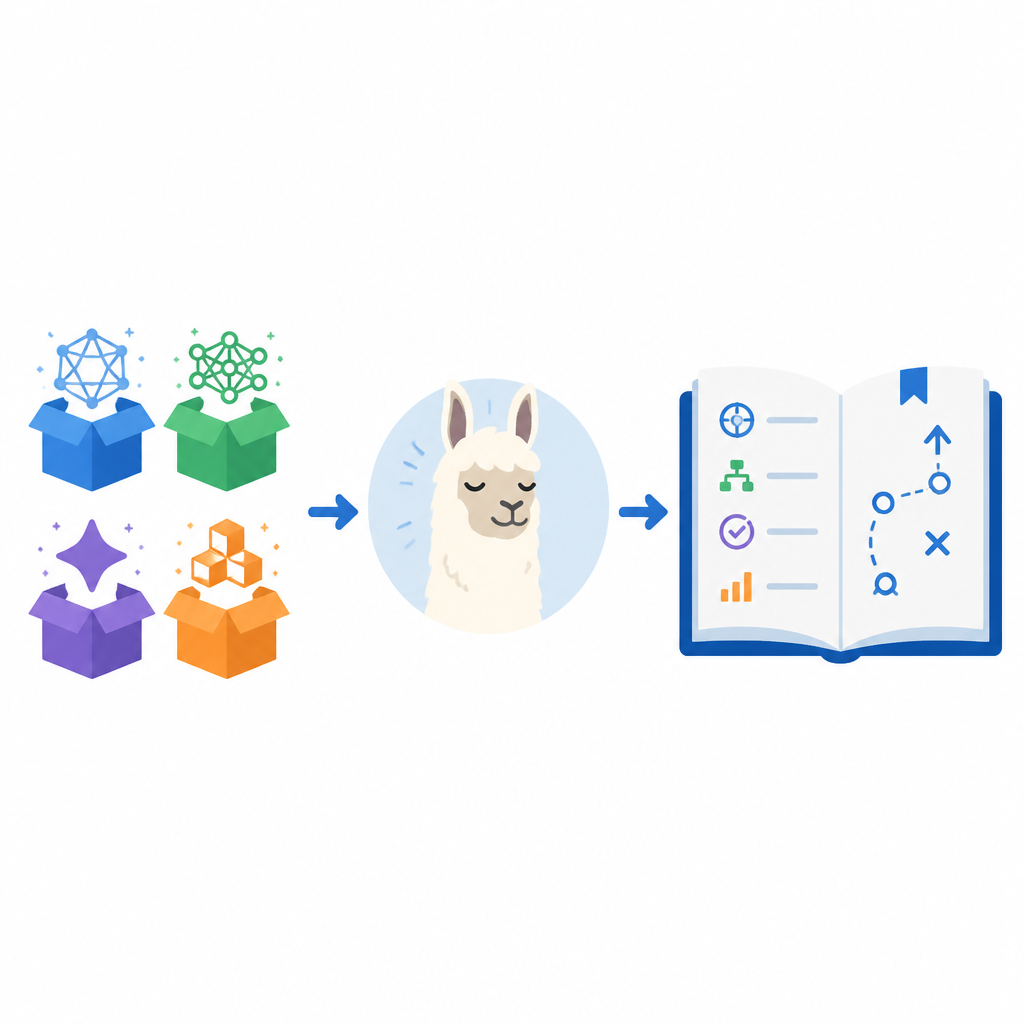
I’ve had to make similar calls when shipping internal models and private SDKs. If access is too open, support gets messy and misuse starts early. If access is too tight, people route around you. Llama’s early case-by-case process tried to balance research access with control, but the leak showed how brittle that balance can be once demand gets hot enough.
How to apply it: decide your access model before launch and write it down in plain English. Include:
- Who can get weights or binaries.
- Whether commercial use is allowed.
- Whether you require approval or just registration.
- What happens if someone mirrors or redistributes the artifact.
If you’re building a model release for real users, don’t hide this in a legal page nobody reads. Put it in the same place you put the checkpoints and usage examples.
The leak is a reminder that distribution is hard to police
On March 3, 2023, a torrent containing Llama's weights was uploaded, with a link to the torrent shared on the 4chan imageboard and subsequently spread through online AI communities.
That one event changed the tone around Llama. It turned a controlled research release into a public distribution problem. Meta sent takedown requests, HuggingFace complied, GitHub complied, and the model still spread through the usual channels. Once weights are out, they are out. That’s the part people keep pretending they can ignore.
What I take from this is not “lock everything down harder.” It’s that you should assume your release will be copied, mirrored, summarized, re-hosted, and repackaged. If you can’t tolerate that, you probably shouldn’t ship weights broadly. If you can tolerate it, then your docs, license, and versioning need to survive outside your own site.
I ran into this lesson with internal tooling docs too. If the docs only make sense on your company wiki, they’re fragile. The same applies to model releases. Once the community starts sharing your artifact, the only durable thing is the clarity of the release itself.
How to apply it: write for the mirror, not just the homepage. That means:
- Version numbers in the filename and the docs.
- A short license summary near the download link.
- Clear notes on base vs instruct vs code variants.
- Changelog entries that explain what changed and why.
If you do that, the community can redistribute your work without turning it into a guessing game.
Commercial use changes everything, and Llama 2 knew it
In a further departure from the original version of Llama, all models are released with weights and may be used for many commercial use cases.
This is the inflection point that mattered most for builders. Llama 2 moved from gated research access to a much more usable distribution model. It still wasn’t open source in the strict sense, because the acceptable use policy imposed restrictions, but it was a lot closer to something a product team could evaluate without jumping through academic hoops.
That distinction matters more than the slogan. I’ve seen teams waste days arguing about whether a model is “open source” when the real question is simpler: can we use it in our product, under our risk tolerance, with our legal team signed off? Llama 2 made that question less painful, even if it didn’t make it disappear.
How to apply it: if you’re releasing a model, separate the conversation into two documents:
- A technical note: architecture, training data summary, evaluation, and intended use.
- A usage note: commercial rights, restrictions, and prohibited uses.
And if you’re consuming a model, don’t stop at “weights available.” Read the policy. I know, boring. Still cheaper than a surprise later.
Instruction tuning is not a bonus feature
Starting with Llama 2, Meta AI released instruction fine-tuned versions alongside foundation models.
What this actually means is that the model family is doing two jobs at once: one version is for raw capability, and another is for usability. That split is obvious now, but it wasn’t always treated that way. Early on, teams would fine-tune a base model internally and then act surprised that the raw checkpoint wasn’t chatty enough for product use.
I’ve done that dance. You pull a base model, test it, and it looks smart but annoying. Then you add a thin instruction layer and suddenly the thing feels like a product instead of a lab sample. Llama’s release pattern normalized that separation. It told people, without saying it loudly enough, that the base model is not the app.
How to apply it: when you publish or evaluate a model, document the instruction path separately. I’d include:
- What instruction data was used.
- Whether human annotations were involved.
- What behaviors the tuning is meant to improve.
- What failure modes still remain.
This helps downstream teams choose the right checkpoint instead of trying to retrofit a base model into a chat interface and then blaming the model when it acts like one.
Release notes should tell me what changed, not just what launched
The latest version is Llama 4, released in April 2025.
That sentence is tiny, but the surrounding history is the real lesson. Llama 3, Llama 3.1, and Llama 4 changed size, architecture, context window, and modality. By the time you get to Llama 4, the family is no longer just “bigger model, better benchmark.” It’s a different system: mixture-of-experts, multimodal input, multilingual support, and new training data sources.
That’s the part I care about as a developer. I don’t want a release announcement that reads like a victory lap. I want a change log that tells me whether I need to re-test prompts, update token budgets, revisit latency assumptions, or rewrite my eval suite. Llama’s version history is useful because the differences are operational, not just cosmetic.
How to apply it: for every new model version, document four things in the first screenful:
- What changed architecturally.
- What changed in training data or tuning.
- What changed in context length or modality.
- What changed for deployment or licensing.
If you can’t summarize those four points quickly, the release note is too vague to be useful.
The template you can copy
# Model release note template

## What this release is
[Model name] is a [base / instruction-tuned / code / multimodal] model family for [primary use case].

## What changed
- Version:
- Architecture:
- Parameter sizes:
- Context window:
- Modalities:
- Training data summary:
- Fine-tuning summary:

## What it is for
- Best for:
- Not for:
- Known failure modes:

## Benchmarks
- Metric 1: [score] on [dataset]
- Metric 2: [score] on [dataset]
- Notes on evaluation setup:

## Access and licensing
- Weight access:
- Commercial use:
- Redistribution:
- Prohibited uses:
- Approval required:

## Operational notes
- Hardware expectations:
- Latency considerations:
- Memory footprint:
- Recommended deployment pattern:

## Release checklist
- [ ] Base model documented
- [ ] Instruction model documented
- [ ] License summary written in plain English
- [ ] Evaluation caveats listed
- [ ] Changelog updated
- [ ] Download link and version match

## Copy-ready short description
[Model name] is a [short description] released for [audience], with [key sizes] and [key constraints].
That’s the version I wish more model teams would publish. It’s blunt, it’s boring, and it saves everyone time.
My read of the original source is straightforward: the Wikipedia article on Llama (language model) is the primary source for the historical and versioning details, while the linked Meta AI announcements and papers are the original material behind those facts. I’ve added my own developer-focused framing here, but the underlying facts come from the source page and its references, including Meta’s Llama announcement, Llama 2, Llama 3, and the meta-llama/llama-models repository.
// Related Articles
- [TOOLS]
Magenta RealTime 2 lets you score in the DAW
- [TOOLS]
Open-source AI tools beat Claude’s paid tiers on value
- [TOOLS]
500 AI agent projects show where agents work now
- [TOOLS]
Chocolatey’s Go package turns installs into policy
- [TOOLS]
Go support policy turns releases into a checklist
- [TOOLS]
RustDesk self-hosting setup for secure remote access